Skip to content
Catalyst
Search
Sign in

Computed, not drawn

Each plate here is computed from a public record: a conformer in PubChem, a crystal in the COD, a structure in the PDB, or a model run from the equations its paper printed.

The hang · 10 plates · 3 rooms

Room I · 4 plates

Caffeine, four ways

One molecule, read four ways: its electron density, the field its charges make, the receptor it sits in, and the course it takes through a day in the blood.
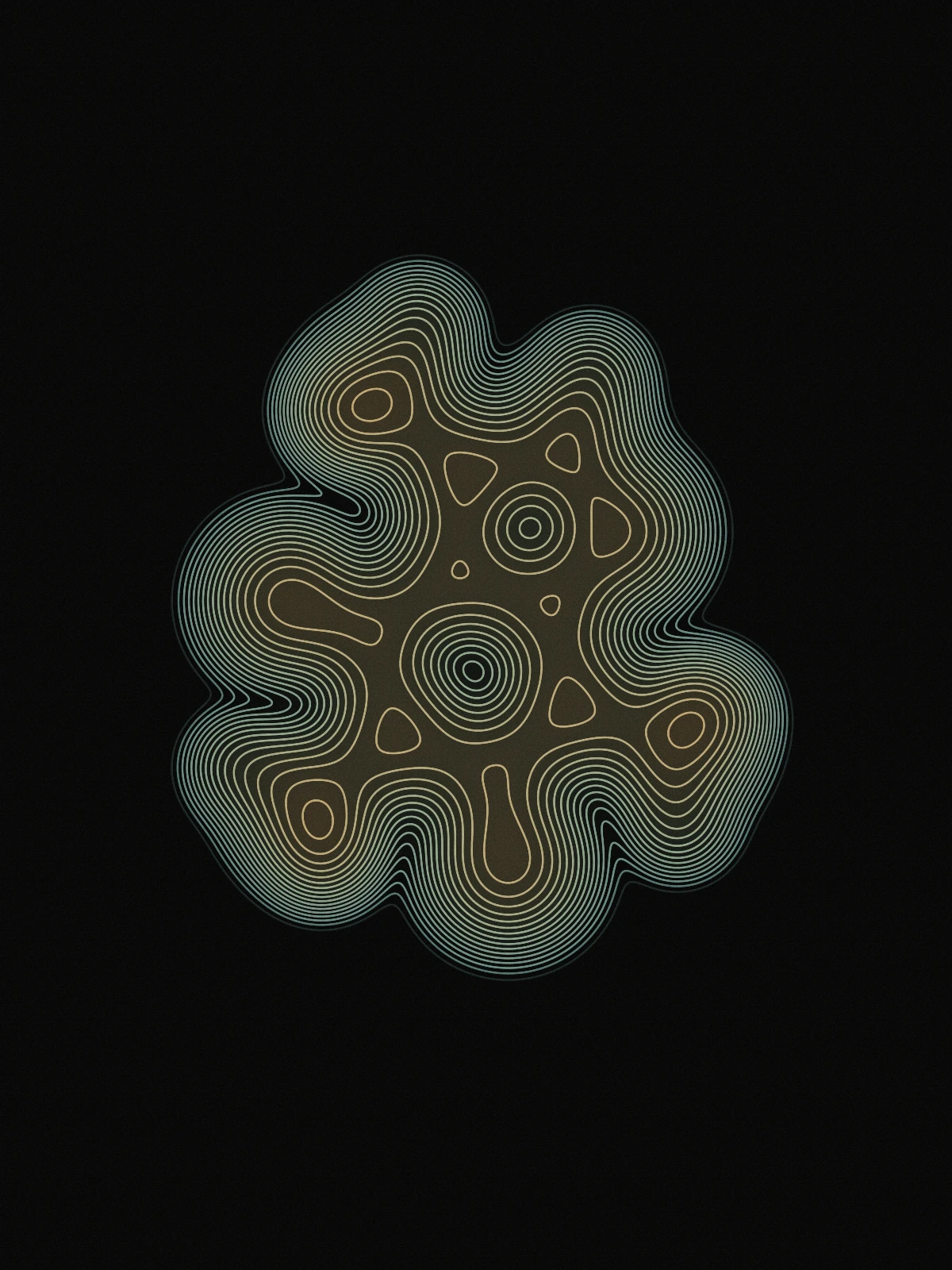
Nested hairline contours trace the electron density of one computed shape of caffeine, teal at the edge warming to amber over the atoms.
caffeine · promolecular electron density · PubChem CID 2519, computed 3D conformer · atom and bond Gaussians, contours every e^⅓

01 · Electron density

Caffeine electron density

PubChem ↗

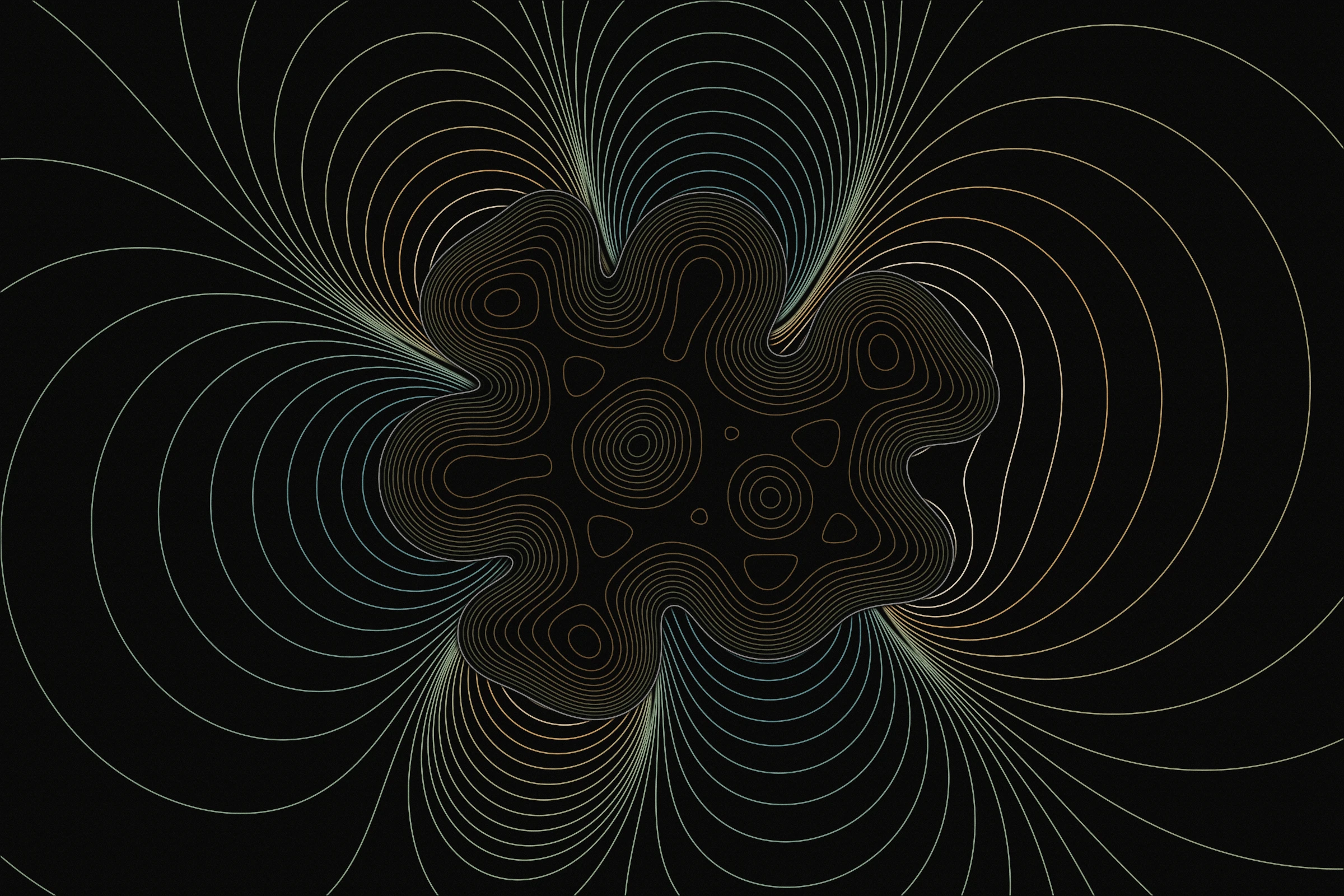
Hairline isopotential curves fan out from caffeine's outline in teal for negative and amber for positive potential, around a dim contour map of the molecule's density.
caffeine · electrostatic potential, molecular plane · PubChem CID 2519 · MMFF94 partial charges as point charges (approximate) · inside: promolecular density

02 · Electrostatic potential

Caffeine's electric field

PubChem ↗

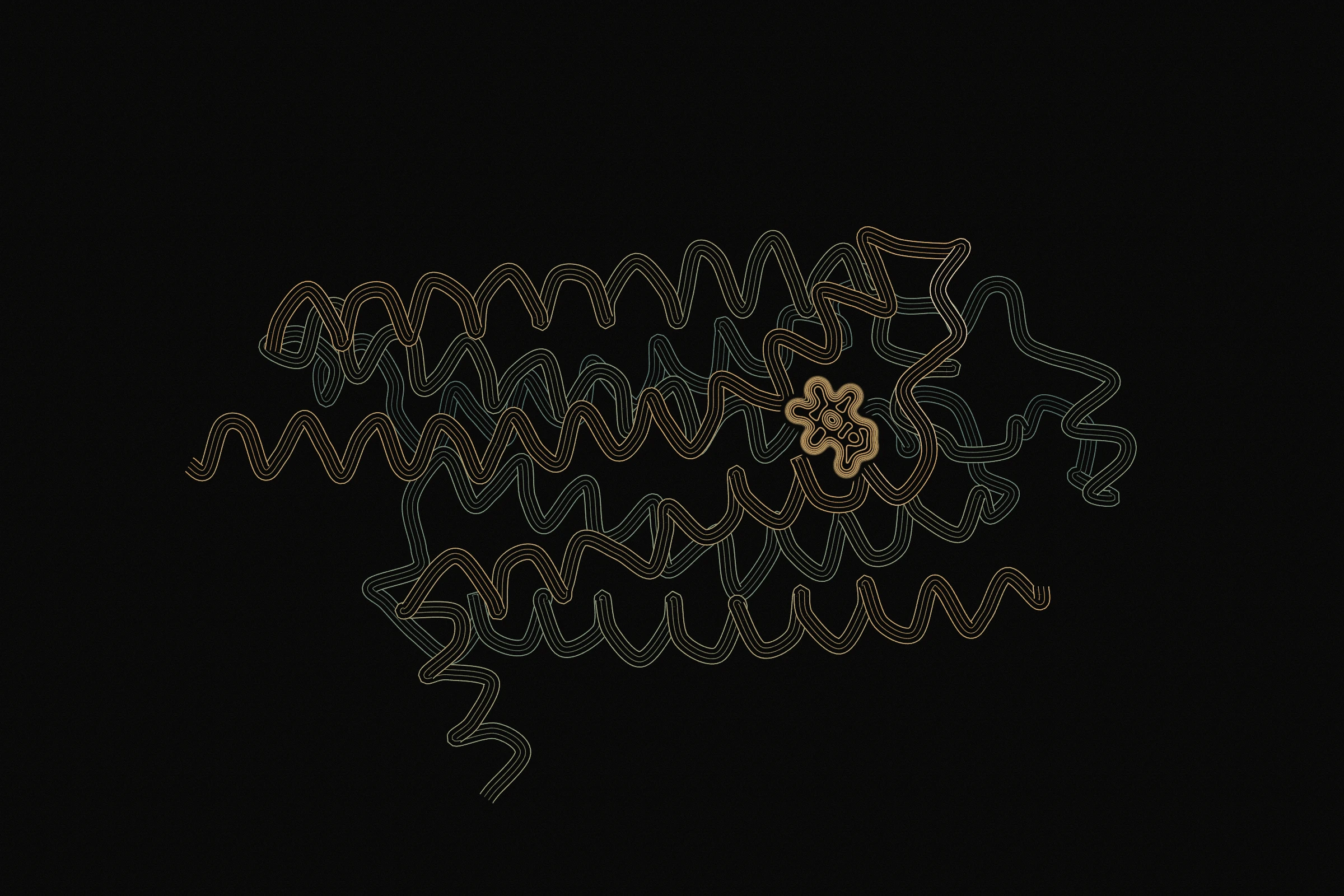
The seven coiled helices of the adenosine A2A receptor drawn as banded hairlines, with caffeine's small contour map sitting in its binding pocket.
adenosine A2A receptor (StaR2 construct) with caffeine · PDB 5MZP (Cheng et al. 2017, 2.1 Å) · Cα spline bands in depth order, BRIL fusion omitted · caffeine as promolecular density

03 · Receptor structure

Caffeine in its receptor

PDB ↗The paper ↗

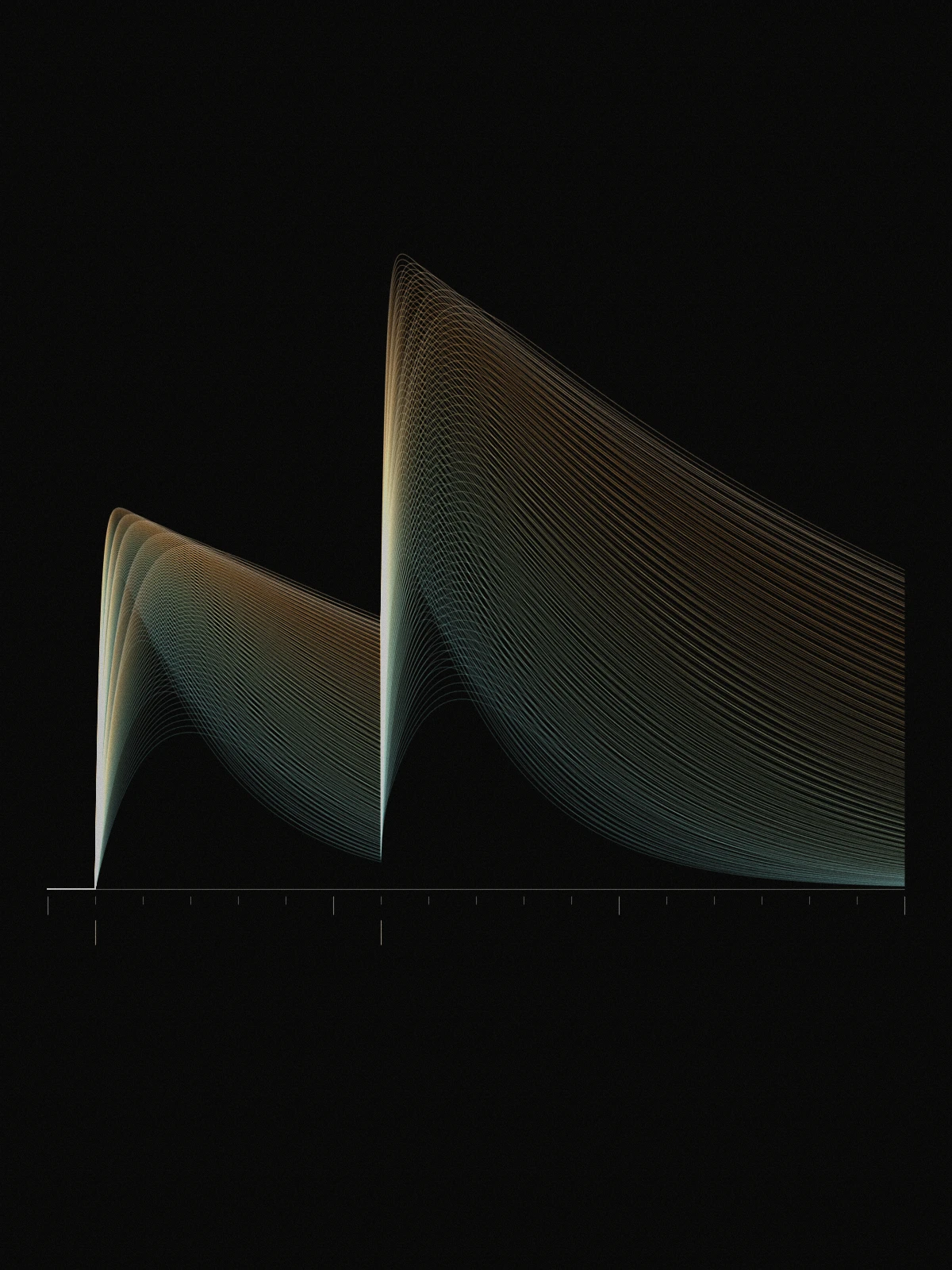
A fan of hairline curves shows caffeine rising after two doses and fading through the night, short half-lives in teal and long ones in amber.
caffeine in plasma, 06:00–06:00 · one-compartment oral model, doses 07:00 and 13:00 · t½ 1.5–10 h, Tmax 30–120 min (Guest et al. 2021, PMID 33388079) · 220 curves, relative concentration

04 · Pharmacokinetic model

A day of caffeine

The paper ↗Europe PMC ↗

Room II · 4 plates

Other matter

Two more supplements as electron density, creatine again as the crystal it packs into, and collagen’s triple helix as the PDB records it.
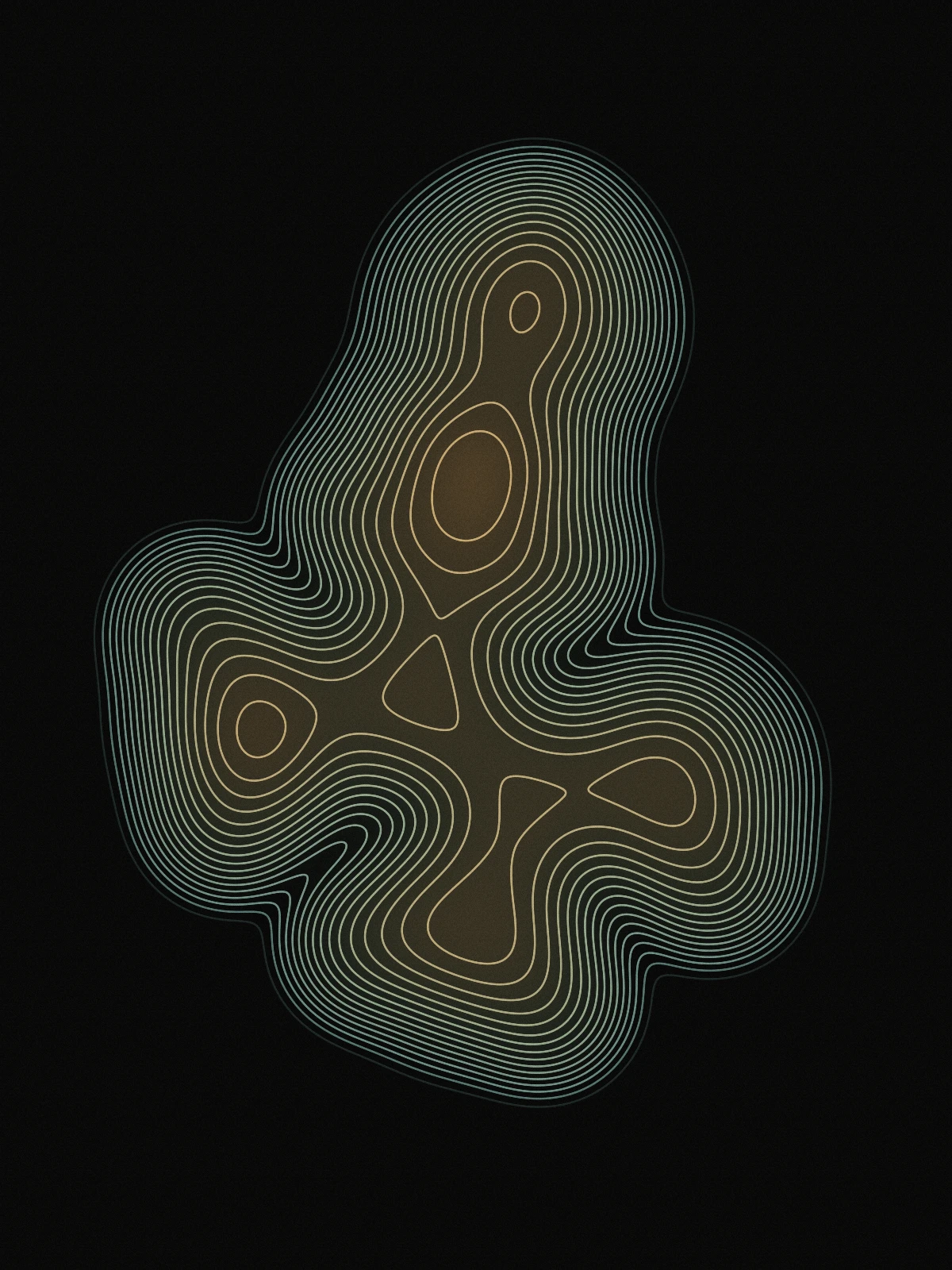
Nested hairline contours trace the electron density of a creatine molecule, teal at the edge warming to amber over the atoms.
creatine · promolecular electron density · PubChem CID 586, 3D conformer · atom and bond Gaussians, contours every e^⅓

05 · Electron density

Creatine electron density

PubChem ↗

Hairline contours follow the long chain of an L-theanine molecule, warm islands marking each heavy atom inside cool teal outer rings.
L-theanine · promolecular electron density · PubChem CID 439378, 3D conformer · atom and bond Gaussians, contours every e^⅓

06 · Electron density

L-theanine electron density

PubChem ↗

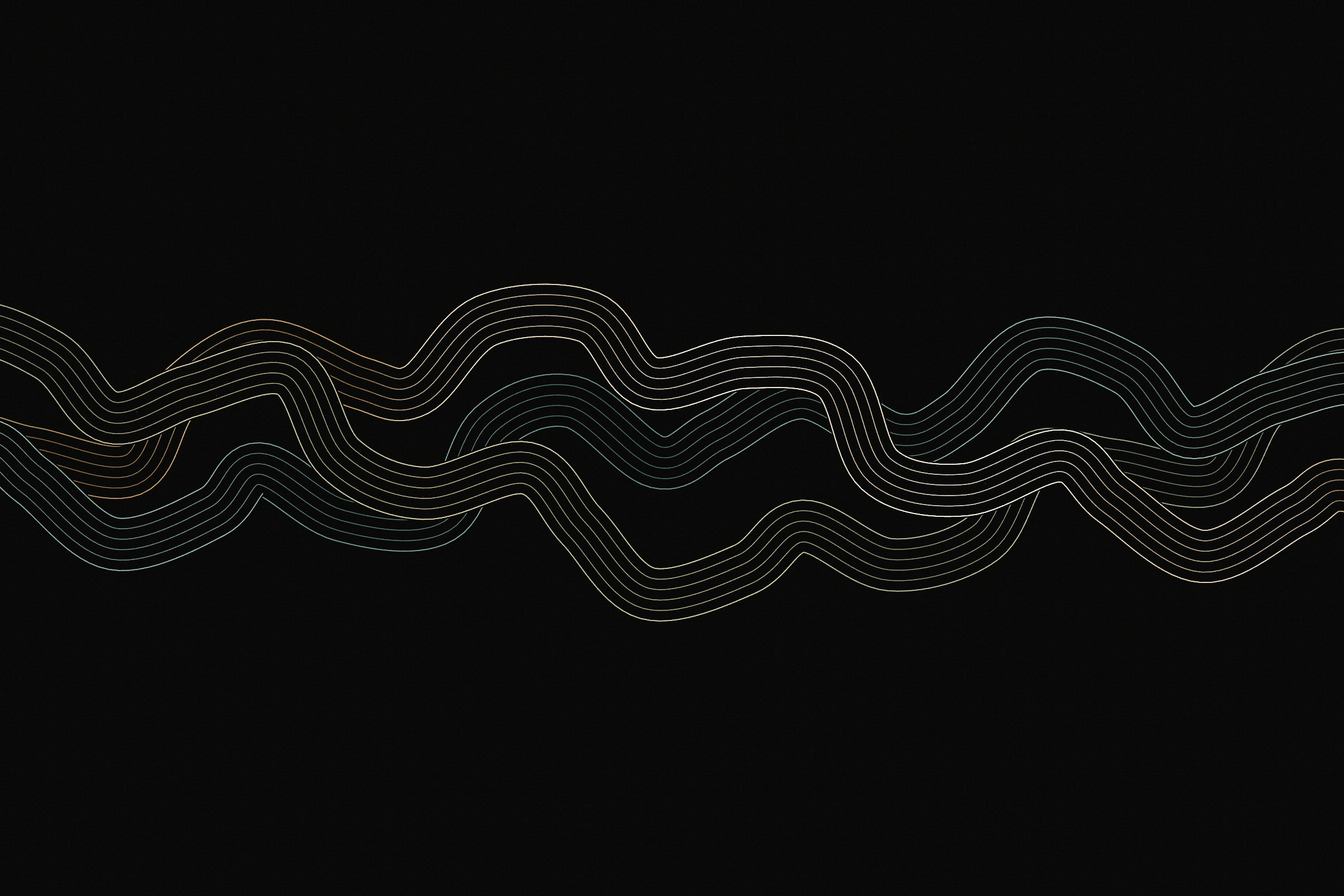
Three banded hairline strands wind over and under one another in collagen's triple helix, running across the frame.
collagen-like peptide (Pro-Hyp-Gly)4-Pro-Hyp-Ala-(Pro-Hyp-Gly)5 · PDB 1CAG (Bella et al. 1994, 1.85 Å) · Cα spline bands in depth order, three chains

07 · Protein structure

Collagen triple helix

PDB ↗PubMed ↗

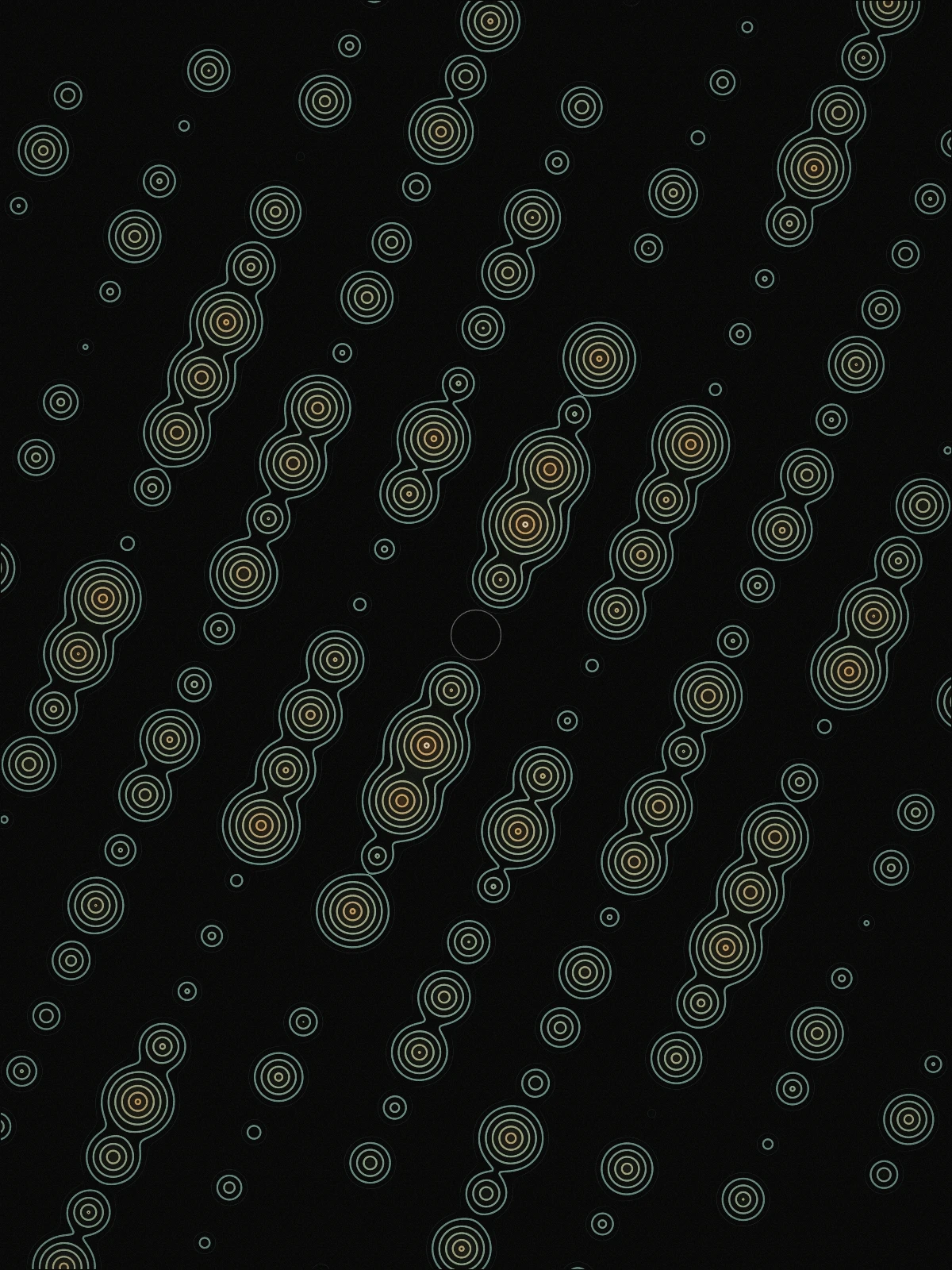
An oblique lattice of reflections from a creatine crystal, each drawn as concentric hairline rings whose count grows with its intensity.
creatine monohydrate · h0l diffraction zone, computed · COD 1101070 (Frampton et al. 1997, P2₁/c) · kinematic X-ray |F|², Cromer–Mann f, B 2 Ų · l odd absent: the c-glide

08 · X-ray diffraction

Creatine crystal diffraction

COD ↗The paper ↗

Room III · 2 plates

Systems in motion

Not molecules but what molecules set going: a nerve membrane’s spikes and a pattern two chemicals settle into, each run from the equations its paper printed.
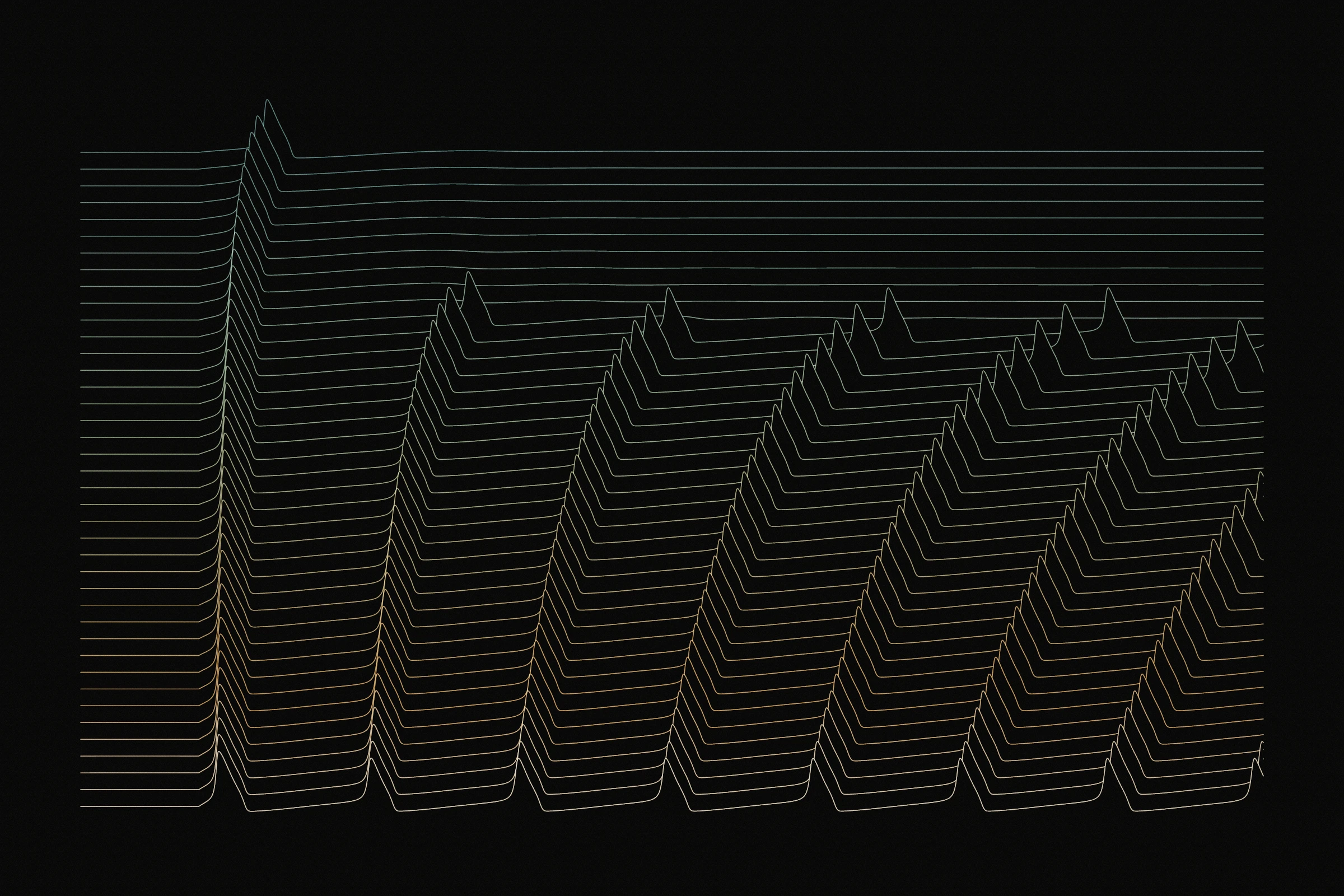
Forty stacked hairline voltage traces, each hiding the one behind, show a neuron's spikes coming faster as the injected current grows.
action potentials · Hodgkin–Huxley 1952 model (J Physiol 117:500) · gNa 120, gK 36, gL 0.3 mS/cm², 6.3 °C, RK4 0.01 ms · 40 traces, step 2.6–16 µA/cm² from 10 ms, 0–100 ms

09 · Membrane model

A neuron firing

The paper ↗

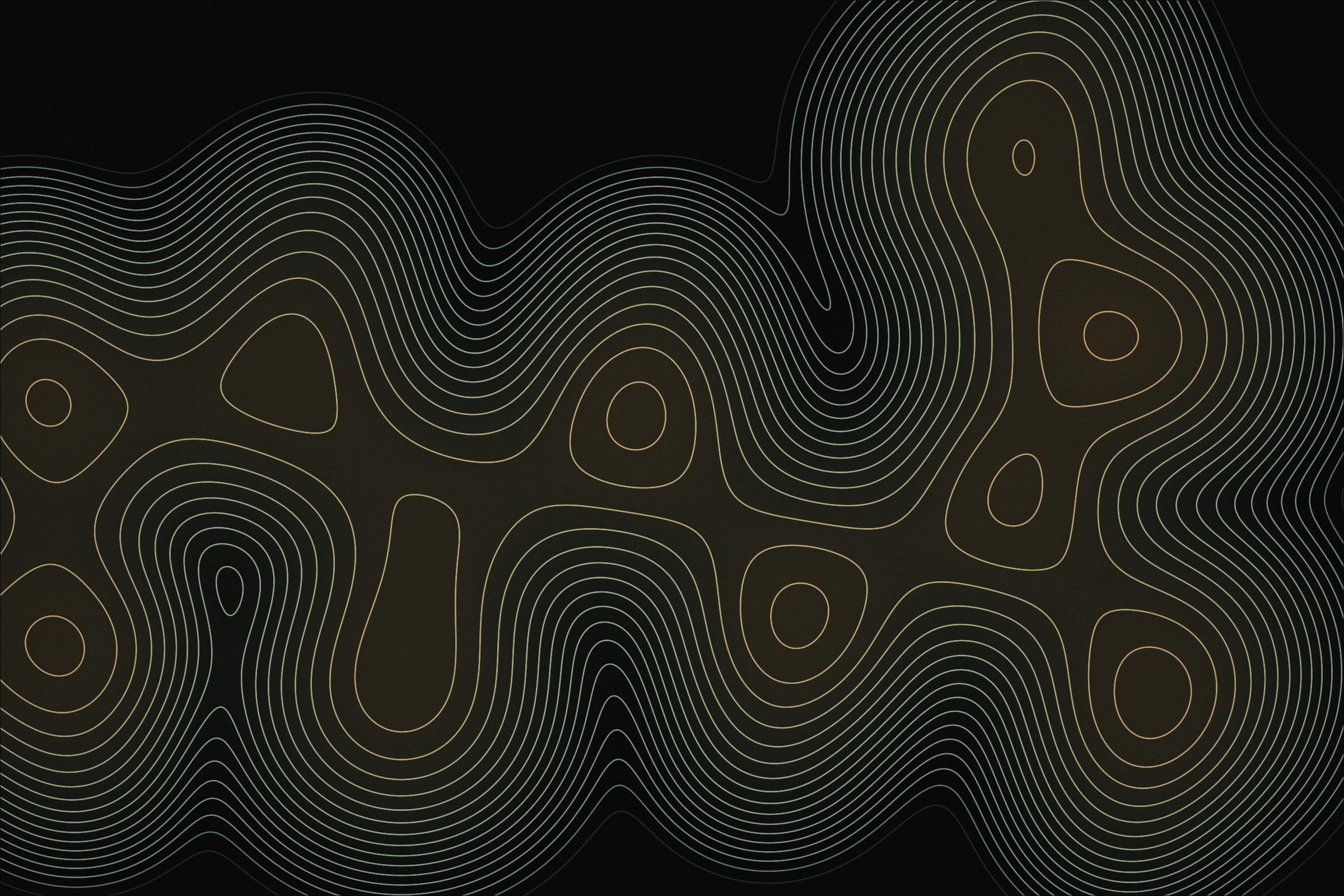
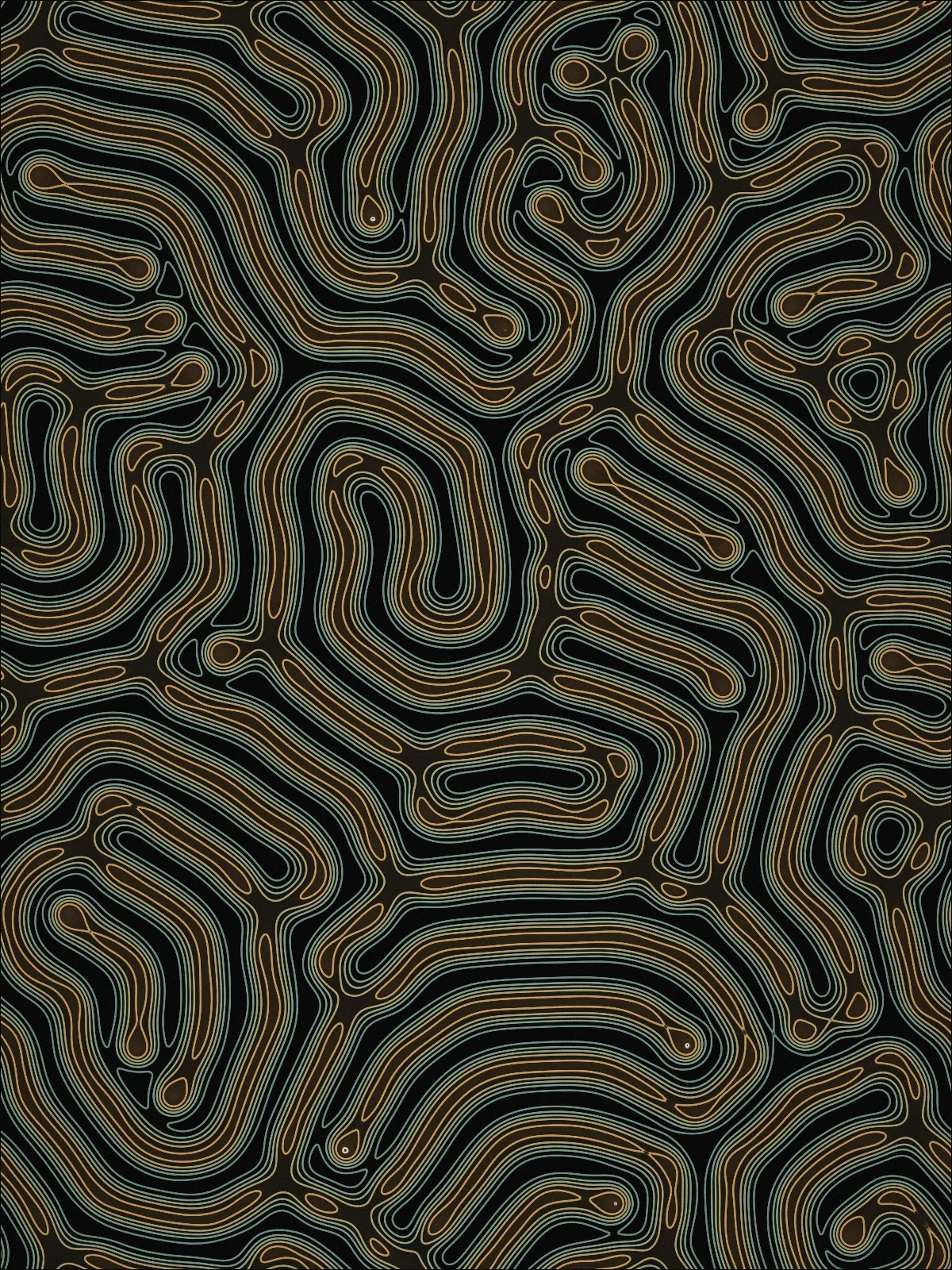
A labyrinth of parallel hairline contours, the pattern two reacting, diffusing chemicals settle into.
reaction–diffusion · Gray–Scott model (Pearson 1993, Science 261:189) · F 0.029, k 0.057, Du/Dv = 2, 480×320 periodic grid, 12,000 steps, fixed seed · isolines of V

10 · Reaction–diffusion

Chemistry making patterns

The paper ↗