The Loneliness Epidemic (And What to Do About It)
Evidence-Based Solutions for Modern Social Isolation
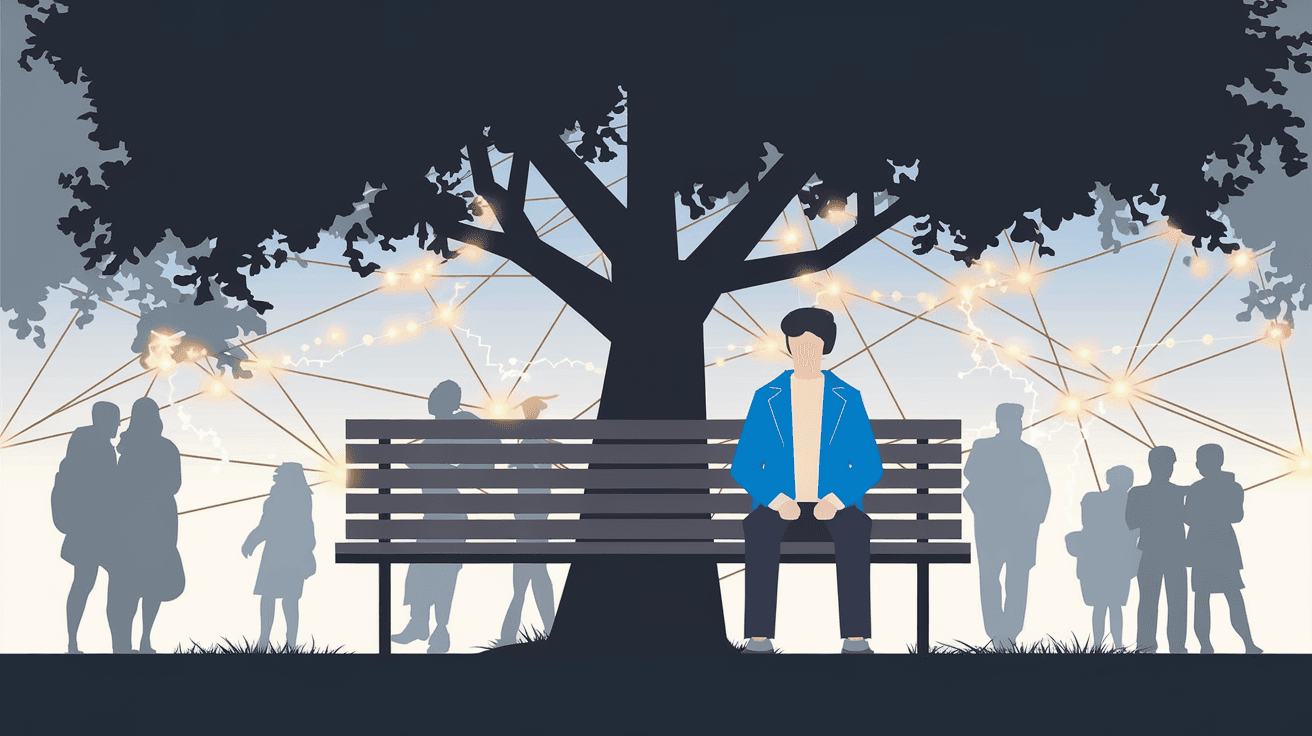
Loneliness kills more people than obesity, air pollution, or excessive drinking—yet we treat it like a character flaw instead of a public health emergency.
We've pathologized loneliness as personal weakness while ignoring the systematic dismantling of social infrastructure that makes meaningful connection nearly impossible in modern life.
The Mortality Data Everyone Ignores#
When Julianne Holt-Lunstad analyzed data from 3.4 million people across 148 studies, the results were stark: social isolation increases your risk of premature death by 26-32%. For context, that's equivalent to smoking 15 cigarettes daily or drinking six alcoholic beverages per day.
The mechanism isn't mysterious. Chronic loneliness triggers a stress response that elevates cortisol, increases inflammation (particularly IL-6 and TNF-α), and dysregulates your immune system. Your body literally thinks it's under attack when socially isolated, maintaining a state of hypervigilance that degrades every biological system over time.
But here's what the mortality studies miss: loneliness isn't just about being alone. UCLA's loneliness scale reveals that 35% of people feel "left out" frequently, 25% feel they "lack companionship," and 27% feel "isolated from others"—even when surrounded by people. This is the paradox of modern loneliness: we're more connected yet more isolated than ever.
The Social Infrastructure Collapse#
Between 1974 and 2021, the percentage of Americans with no close friends tripled from 3% to 12%. The average American adult has only 1.9 close friends, down from 3.5 in 1990. But the problem runs deeper than friendship statistics.
Robert Putnam's research in "Bowling Alone" documented the systematic erosion of what sociologists call "social capital"—the networks of relationships that create community resilience. Since 1975:
- Membership in civic organizations dropped 58%
- Family dinner frequency decreased 33%
- Having friends over declined 45%
- Attending public meetings fell 40%
The Digital Connection Paradox#
Social media promised to solve isolation but delivered the opposite. A longitudinal study of 1,787 adults found that each 10% increase in negative social media experiences correlated with a 13% increase in depression and a 9% increase in loneliness.
The mechanism is comparison-driven misery. Social media amplifies what researchers call "compare and despair"—the tendency to measure your internal experience against others' curated external presentations. Your brain processes social media rejection (being ignored, unfriended, or excluded) using the same neural pathways as physical pain.
But here's the nuance: not all digital connection is harmful. Video calls with close friends or family show similar neural activation to in-person interaction. The difference is intimacy and reciprocity. Passive consumption (scrolling feeds) increases loneliness; active connection (meaningful exchanges) can reduce it.
The Biology of Belonging#
When you feel genuinely connected, your nervous system shifts into parasympathetic dominance—the "rest and digest" state that promotes healing, immune function, and emotional regulation. Oxytocin increases, cortisol decreases, and inflammation markers drop.
But connection quality matters more than quantity. A 2017 study found that people with high-quality relationships (characterized by trust, reciprocity, and emotional support) had 22% lower cortisol levels and 10% better immune function than those with many low-quality relationships.
The research distinguishes between three types of social connection:
- Intimate bonds (close family, best friends): 3-5 relationships maximum
- Sympathy groups (meaningful friendships): 12-15 people
- Stable social network (acquaintances you see regularly): 50-150 people
The Vulnerability Requirement#
The biggest barrier to connection isn't opportunity—it's emotional risk. Brené Brown's research on vulnerability found that meaningful connection requires what she calls "shame resilience": the ability to experience and move through the discomfort of being truly seen.
Most people practice what psychologists call "foreshortened vulnerability"—sharing just enough to seem open without risking real rejection. But connection requires what researcher Arthur Aron calls "self-expansion": the willingness to be changed by relationship.
A fascinating 1997 study had strangers ask each other increasingly personal questions, culminating in four minutes of sustained eye contact. 30% of participants reported feeling closer to their partner than to their closest friend. Two participants later married.
The protocol works because it bypasses small talk and creates what psychologists call "fast-track intimacy"—the rapid development of emotional closeness through structured vulnerability.
The Community Prescription#
Individual therapy treats loneliness as a personal problem, but the research suggests environmental solutions work better. The most effective interventions create what sociologist Ray Oldenburg called "third places"—spaces that aren't home or work where regular, informal social interaction occurs.
Examples of successful third place interventions:
- Community gardens: Participants report 40% less loneliness after six months
- Maker spaces: Collaborative projects create natural connection points
- Walking groups: Low-pressure, regular interaction with built-in conversation topics
- Skill-sharing networks: Teaching and learning create reciprocal relationships
The Service Solution#
Perhaps the most robust finding in loneliness research is that helping others reliably reduces isolation. Volunteering for just two hours per week decreases loneliness by 16% and increases life satisfaction by 12%.
The mechanism is threefold:
- Purpose: Helping others provides meaning beyond self-focus
- Perspective: Exposure to others' challenges contextualizes your own
- Connection: Service creates natural opportunities for meaningful interaction
- Regular commitment (weekly, not sporadic)
- Direct human interaction (not just task completion)
- Skill utilization (leveraging your strengths)
- Clear impact (seeing how your contribution matters)
The Protocol: Building Connection Architecture#
Based on the research, here's a systematic approach to reducing loneliness:
Week 1-2: Assessment
- Complete the UCLA Loneliness Scale to establish baseline
- Map your current social connections using the three-tier model
- Identify which tier needs most attention (usually intimate bonds)
- Choose one third place to visit weekly (library, coffee shop, gym, community center)
- Commit to one regular group activity (class, club, volunteer role)
- Schedule weekly one-on-one time with existing close connections
- Use the "36 Questions" protocol with someone you want to know better
- Share one meaningful struggle with a trusted person each week
- Practice asking for help with small requests (builds reciprocity)
- Begin regular volunteer commitment (2+ hours weekly)
- Offer to help neighbors, colleagues, or friends with specific tasks
- Join or create a skill-sharing group in your community
- Weekly intimate connection (deep conversation with close friend/family)
- Monthly social expansion (meet someone new or deepen existing relationship)
- Quarterly community contribution (organize, host, or lead something)
Edge Cases: When This Doesn't Apply#
This protocol assumes basic social skills and mental health stability. It may not work for:
Social anxiety disorder: Requires therapeutic intervention before community engagement Major depression: May need medication/therapy to provide energy for connection Autism spectrum: May need modified approaches that respect sensory and social preferences Trauma survivors: Trust-building may require professional support first Geographic isolation: May need digital-first strategies before in-person connection
Additionally, some people are naturally low in social needs. If you're content with minimal social connection and it's not impacting your health or functioning, you may not need intervention.
The Infrastructure Investment#
Individual solutions help, but loneliness is fundamentally a systems problem requiring systems solutions. The most successful interventions happen at community and policy levels:
- Urban planning: Walkable neighborhoods with public spaces
- Workplace design: Common areas and collaboration opportunities
- Educational policy: Social-emotional learning and community service requirements
- Healthcare integration: Social prescribing (doctors recommending community activities)
- Technology design: Platforms optimized for meaningful connection, not engagement
The Economic Reality#
Loneliness costs the US healthcare system $6.7 billion annually through increased doctor visits, emergency room usage, and prescription medication. Lonely employees take 25% more sick days and are 67% more likely to quit.
But connection investments pay dividends. Workplaces with high social cohesion see 31% higher productivity and 37% better sales performance. Communities with strong social capital have lower crime rates, better educational outcomes, and greater economic mobility.
This isn't touchy-feely social work—it's economic development through relationship building.
Key Takeaways
- 1.Loneliness is a health crisis comparable to smoking or obesity, increasing premature death risk by 26-32%
- 2.Modern isolation stems from systematic social infrastructure collapse, not individual character flaws
- 3.Quality trumps quantity: 3-5 intimate bonds matter more than hundreds of weak connections
- 4.Effective solutions require regular vulnerability practice and community service, not just social events
Your Primary Action
Choose one third place (library, gym, coffee shop, community center) and visit it at the same time weekly for the next month, making brief, friendly contact with staff or regulars each visit.
Expected time to results: 2-4 weeks for initial mood improvements, 3-6 months for measurable relationship depth and loneliness reduction
Free Heart Tools
Action Steps
- 1Schedule one meaningful social interaction per week with existing connections
- 2Join a structured group activity aligned with your interests or values
- 3Practice vulnerable conversation by sharing one personal challenge with a trusted person
- 4Create regular social rituals like weekly coffee dates or monthly dinner parties
- 5Volunteer for causes you care about to build purpose-driven relationships
How to Know It's Working
- Increase in weekly meaningful conversations from baseline count
- Reduced scores on UCLA Loneliness Scale after 8 weeks
- Having at least 2-3 people you can call during a personal crisis
Need this built for your business?
I build AI systems, automation workflows, and custom tools that turn these strategies into running infrastructure. Chemical engineer turned AI architect — I speak both the theory and the implementation.
Related Articles
Did you find this article helpful?
The Weekly Decode
One insight per dimension, every week. What they're hiding about your food, your money, your mind, your relationships, and your sense of meaning — backed by research, delivered free. No sponsors. No affiliates. No bullshit.
Ready to take action?
Get personalized insights and track your progress across all five dimensions with The Mirror.
Access The Mirror