The Trauma Bond Detector: Recognizing Unhealthy Attachment Patterns
4 Warning Signs Your "Connection" Is Actually Shared Pain
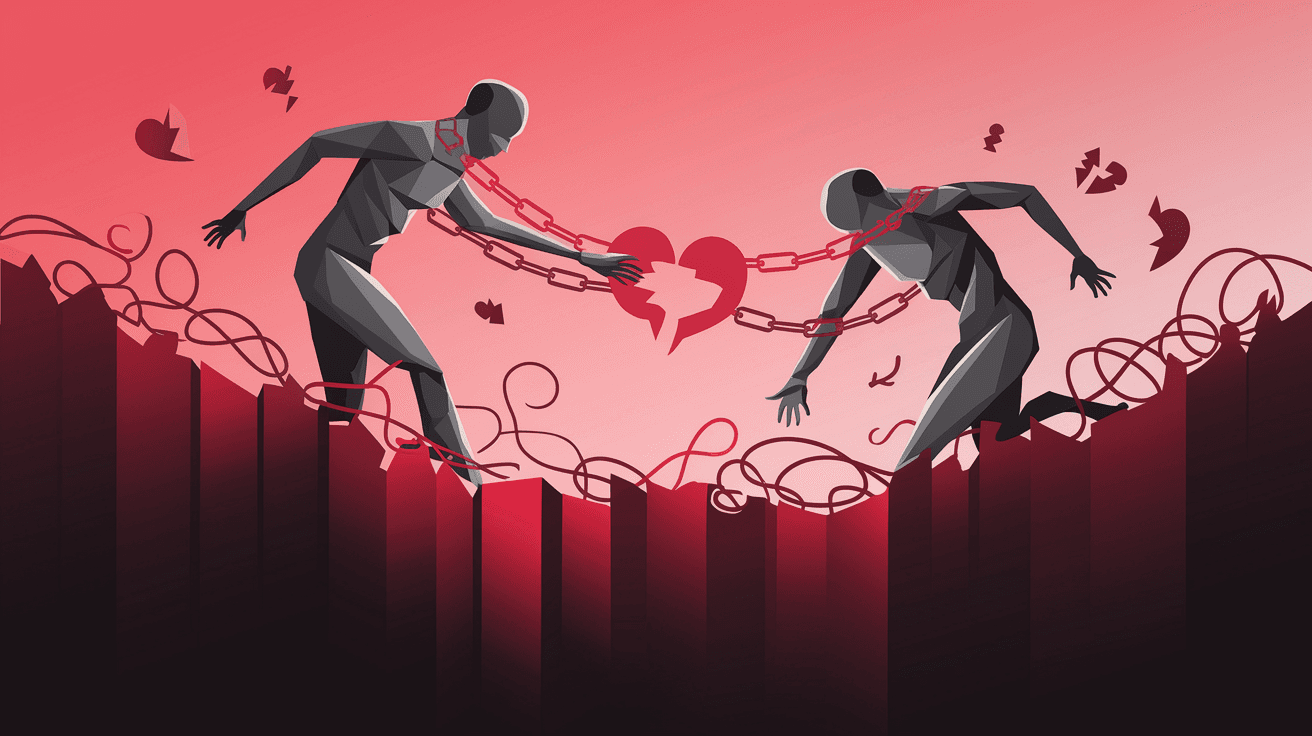
That magnetic pull you feel toward someone who hurts you isn't love—it's your nervous system confusing intensity with intimacy.
Many people mistake trauma bonds for deep connection, staying trapped in cycles of pain because the intermittent reinforcement feels like passion. Without a clear framework to identify these patterns, we repeat them across relationships.
Trauma bonding occurs when shared suffering creates artificial intimacy. Unlike healthy attachment built on safety and consistency, trauma bonds thrive on unpredictability and emotional highs and lows.
What Makes Trauma Bonds Feel So Real?#
Your brain releases the same neurochemicals (dopamine, oxytocin, adrenaline) during trauma bonding as it does during genuine love. The key difference: timing and context. Trauma bonds create addiction-like patterns where relief from pain feels like love.
Research from Dr. Patrick Carnes shows trauma bonds form through a cycle of tension building, incident, reconciliation, and calm—identical to addiction cycles.
The 4-Point Trauma Bond Detection System#
1. The Intensity Test Did the connection feel immediate and overwhelming? Healthy attachment builds gradually. If you felt "addicted" to someone within weeks, that's a red flag.
2. The Pain-to-Pleasure Ratio Track your emotional states. Trauma bonds create 70% distress, 30% relief. Healthy relationships flip this ratio. Use an attachment style calculator to understand your baseline patterns.
3. The Isolation Check Do friends and family express concern? Trauma bonds often isolate you from support systems. Healthy relationships integrate into your existing life.
4. The Recovery Pattern After fights, do you feel euphoric relief rather than resolution? This "trauma high" mimics the relief addicts feel when using again.
The Biology Behind the Bond#
Studies show trauma bonding activates the same brain regions as substance addiction. The anterior cingulate cortex—responsible for emotional regulation—becomes hyperactive during these cycles.
Your emotional intelligence can help you recognize when emotions are driving decisions versus rational assessment.
Breaking the Pattern#
The first step is awareness. Use a boundary strength assessment to understand your current relationship patterns. Most people in trauma bonds score below 40% on boundary health.
For deeper understanding of attachment patterns and communication skills, explore Decode: Heart, which covers attachment theory, emotional intelligence, and healthy relationship dynamics.
Need help building systems to identify and avoid these patterns in your business relationships? Catalyst Consulting builds AI-powered tools for businesses to improve client communication and relationship management.
Key Takeaways
- 1.Trauma bonds mimic love through neurochemical addiction patterns
- 2.Intensity and immediate connection are warning signs, not romantic ideals
- 3.The 70/30 pain-to-pleasure ratio distinguishes trauma bonds from healthy attachment
Your Primary Action
Take the [attachment style calculator](https://catalystproject.ai/calculators/heart/attachment-style) to identify your current patterns and potential vulnerabilities to trauma bonding.
Expected time to results: 1-2 weeks for pattern recognition, 2-3 months for behavior changes with consistent practice
Free Heart Tools
Action Steps
- 1Complete the [attachment style assessment](https://catalystproject.ai/calculators/heart/attachment-style) to understand your baseline patterns
- 2Track your emotional states in current relationships for one week using the 4-point detection system
- 3If you recognize trauma bond patterns, schedule a [discovery call](https://cal.com/thecatalyst/discovery) to discuss healthy relationship strategies
How to Know It's Working
- Increased awareness of emotional patterns within 1-2 weeks
- Ability to distinguish intensity from genuine connection
- Improved relationship satisfaction scores on follow-up assessments
Sources & Citations
- [1]Carnes, Patrick. "The Betrayal Bond: Breaking Free of Exploitative Relationships." Health Communications, 2019.
- [2]Dutton, Donald G. "The Abusive Personality: Violence and Control in Intimate Relationships." Guilford Press, 2007.
- [3]Van der Kolk, Bessel. "The Body Keeps the Score: Brain, Mind, and Body in the Healing of Trauma." Penguin Books, 2014.
Need this built for your business?
I build AI systems, automation workflows, and custom tools that turn these strategies into running infrastructure. Chemical engineer turned AI architect — I speak both the theory and the implementation.
Related Articles
Did you find this article helpful?
The Weekly Decode
One insight per dimension, every week. What they're hiding about your food, your money, your mind, your relationships, and your sense of meaning — backed by research, delivered free. No sponsors. No affiliates. No bullshit.
Ready to take action?
Get personalized insights and track your progress across all five dimensions with The Mirror.
Access The Mirror