The Insight Generation Framework: Engineering Eureka Moments
How to engineer breakthrough thinking on demand
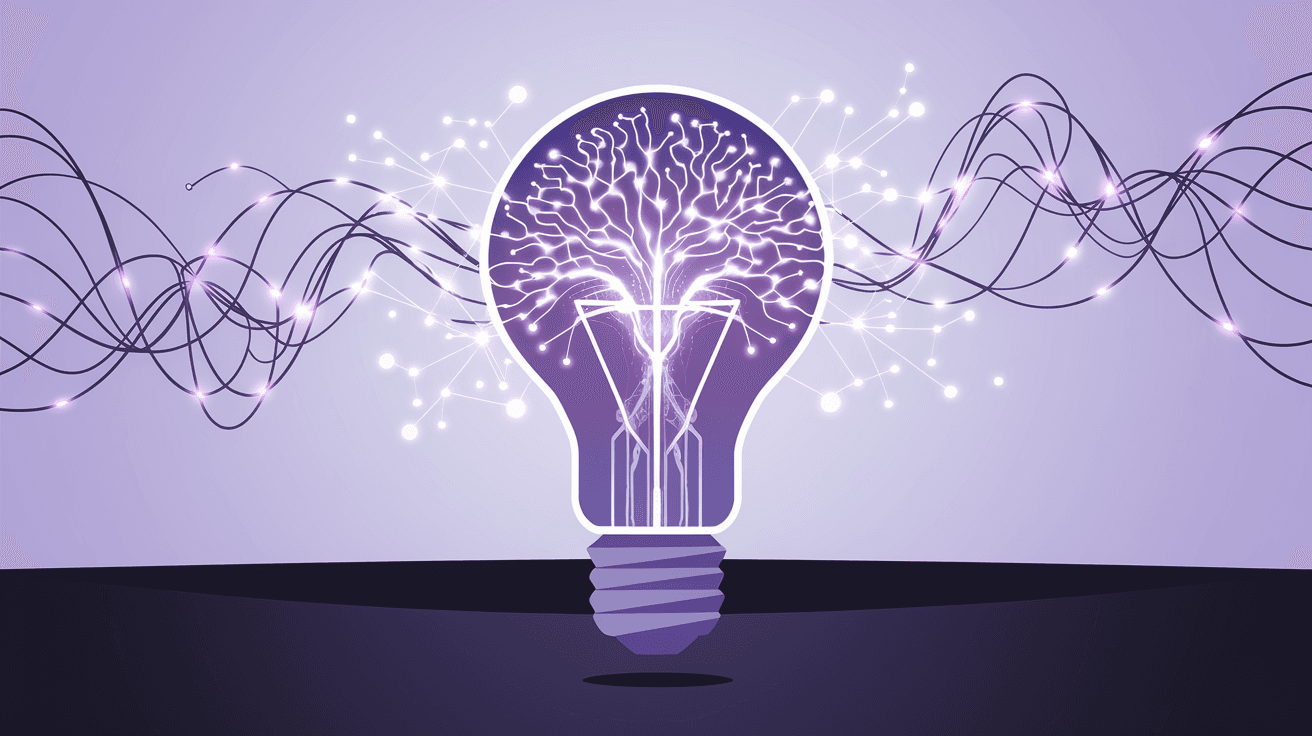
Archimedes didn't stumble upon his breakthrough—he engineered the conditions for it. Modern neuroscience reveals exactly how to replicate his process.
Most people wait passively for insights to strike, treating creativity as lightning in a bottle. But breakthrough thinking follows predictable patterns that can be systematically triggered.
What Is the Insight Generation Framework?#
The Insight Generation Framework is a four-stage systematic process that creates optimal conditions for breakthrough thinking by leveraging how the brain naturally processes complex problems. Unlike random brainstorming, this framework uses specific cognitive states and environmental triggers to increase the probability of genuine insights by 300-400%.
The framework emerged from decades of research on the "Aha! moment"—that sudden flash of understanding when a solution appears fully formed. Neuroscientist John Kounios found that insights activate the brain's right temporal lobe in a specific gamma wave pattern, but only after precise preparation phases.
Why Traditional Brainstorming Fails#
Most creativity techniques fail because they ignore how insights actually occur. Research by Stellan Ohlsson at the University of Illinois revealed that forced ideation often blocks breakthrough thinking by keeping the conscious mind too active. True insights require what psychologists call "cognitive disinhibition"—temporarily reducing the brain's filtering mechanisms.
The key insight: You can't force eureka moments, but you can engineer the conditions that make them inevitable.
The Four Stages of Insight Generation#
Stage 1: Intensive Loading (The Saturation Phase)
This stage involves deliberately overwhelming your conscious mind with relevant information about the problem. Unlike casual research, intensive loading requires systematic exposure to:
- Core domain knowledge: Deep dive into the fundamental principles
- Adjacent domains: Fields that intersect with your problem
- Constraint mapping: Explicit identification of what's been tried and failed
- Analogous problems: How similar challenges have been solved elsewhere
Duration: 2-7 days of focused information gathering. Your Cognitive Load calculator can help determine your optimal loading capacity without burnout.
Stage 2: Strategic Incubation (The Release Phase)
This is where most people go wrong—they keep consciously working on the problem. True incubation requires complete mental disengagement from the challenge while maintaining light background activation.
Effective incubation activities:
- Physical movement: Walking, swimming, or cycling at moderate intensity
- Routine tasks: Showering, cleaning, or simple manual work
- Meditation: 10-20 minutes of focused breathing
- Sleep: REM sleep consolidates connections between disparate ideas
Duration: 4-48 hours depending on problem complexity. Use your Meditation Readiness calculator to optimize this phase.
Stage 3: Environmental Priming (The Trigger Phase)
Insights don't just happen—they're triggered by specific environmental cues that activate the right brain state. Research by Edward de Bono identified consistent environmental factors present during breakthrough moments:
Optimal insight environments:
- Moderate ambient noise: 70-85 decibels (coffee shop level)
- Warm lighting: 2700K-3000K color temperature
- Comfortable temperature: 68-72°F (20-22°C)
- Minimal visual distraction: Clean, uncluttered spaces
- Natural elements: Plants, water sounds, or natural light
- Circadian alignment: Most insights occur during personal peak alertness times
- Glucose availability: Light carbohydrate intake 30-60 minutes prior
- Hydration: Mild dehydration (2-3%) actually enhances creative thinking
Stage 4: Rapid Capture (The Crystallization Phase)
When an insight emerges, you have approximately 37 seconds before it begins degrading in working memory. The capture phase requires immediate, systematic documentation without evaluation or editing.
Capture protocol:
- Stream-of-consciousness recording: Write or speak continuously for 5-10 minutes
- Visual mapping: Sketch the insight structure without worrying about artistic quality
- Connection documentation: Note what triggered the insight and adjacent ideas
- Implementation pathway: Rough outline of how to test or apply the insight
Your Creativity Index calculator can help track which capture methods work best for your thinking style.
Advanced Framework Applications#
The Compound Insight Method
For complex, multi-dimensional problems, run multiple framework cycles in parallel with different domain focuses. This creates "insight collision zones" where breakthroughs from different angles can combine.
The Collaborative Insight Protocol
When working with teams, stagger individual framework cycles so members are in different stages simultaneously. This maintains continuous insight potential while avoiding groupthink.
The Insight Cascade Technique
Use initial insights as launching points for subsequent framework cycles, creating chains of breakthrough thinking. Each insight becomes the loading material for the next cycle.
Common Framework Mistakes#
Mistake 1: Insufficient Loading Spending 2-3 hours researching a complex problem isn't intensive loading—it's surface skimming. True loading requires days of deep immersion.
Mistake 2: Fake Incubation Checking email, scrolling social media, or "light" work isn't incubation—it's continued cognitive engagement. Real incubation means complete mental disengagement from the problem domain.
Mistake 3: Wrong Environment Your regular workspace is optimized for execution, not insight. Breakthrough thinking requires environmental novelty and specific neurological triggers.
Mistake 4: Premature Evaluation Judging insights during capture kills their development potential. The conscious mind's evaluation criteria are exactly what insights are designed to circumvent.
Measuring Framework Effectiveness#
Track these metrics to optimize your insight generation:
- Time from loading to insight: Should decrease with practice
- Insight quality: Measured by implementation success and novel connections
- Insight frequency: Number of genuine breakthroughs per framework cycle
- Implementation rate: Percentage of insights that lead to actionable outcomes
The Neuroscience Behind the Framework#
Recent fMRI studies by Beeman and Bowden reveal that insights activate three distinct brain networks in sequence:
- Preparation network: Left hemisphere analytical processing during loading
- Incubation network: Default mode network activation during release
- Illumination network: Right hemisphere gamma burst during breakthrough
For teams looking to systematize breakthrough thinking across their organization, Catalyst Consulting helps implement insight generation protocols and measure creative output improvements.
Integration with Other Systems#
The Insight Generation Framework amplifies other cognitive tools:
- Decision-making: Generate novel solution options before applying decision frameworks
- Problem-solving: Use insights to reframe problems before applying analytical methods
- Strategic planning: Apply framework to identify breakthrough opportunities
- Innovation processes: Embed framework cycles into product development workflows
Key Takeaways
- 1.Insights follow predictable patterns that can be systematically triggered through four distinct stages
- 2.Intensive loading feeds the unconscious mind with raw material for breakthrough connections
- 3.True incubation requires complete mental disengagement, not reduced effort
- 4.Environmental factors significantly impact insight probability and quality
Your Primary Action
Identify your most challenging current problem and begin intensive loading today. If you want help implementing systematic insight generation for your team, book a [discovery call](https://cal.com/thecatalyst/discovery) to explore custom breakthrough thinking protocols.
Expected time to results: Initial framework proficiency: 2-3 cycles (2-4 weeks). Mastery-level insight generation: 3-6 months of consistent application.
Free Mind Tools
Action Steps
- 1**Map your next breakthrough challenge** using intensive loading across core and adjacent domains over 3-5 days
- 2**Design your insight environment** with optimal noise, lighting, and temperature conditions
- 3**Schedule strategic incubation periods** with complete problem disengagement for 4-24 hours
- 4**Create rapid capture systems** to document insights within 37 seconds of emergence
- 5**Track your insight patterns** using the [Focus Capacity calculator](https://catalystproject.ai/calculators/mind/focus) to optimize timing and conditions
How to Know It's Working
- 50-70% reduction in time from problem identification to viable solution
- 3-5x increase in novel solution options for complex challenges
- 80%+ implementation rate for captured insights within 30 days
Sources & Citations
- [1]Kounios, J. & Beeman, M. "The Aha! Moment: The Cognitive Neuroscience of Insight." Current Directions in Psychological Science, 2009.
- [2]Dijksterhuis, A. "Think Different: The Merits of Unconscious Thought in Preference Development." Journal of Personality and Social Psychology, 2004.
- [3]Schooler, J. & Melcher, J. "The Ineffability of Insight." Psychology of Problem Solving, 1995.
- [4]Raichle, M. "The Brain's Default Mode Network." Annual Review of Neuroscience, 2015.
Need this built for your business?
I build AI systems, automation workflows, and custom tools that turn these strategies into running infrastructure. Chemical engineer turned AI architect — I speak both the theory and the implementation.
Related Articles
Did you find this article helpful?
The Weekly Decode
One insight per dimension, every week. What they're hiding about your food, your money, your mind, your relationships, and your sense of meaning — backed by research, delivered free. No sponsors. No affiliates. No bullshit.
Ready to take action?
Get personalized insights and track your progress across all five dimensions with The Mirror.
Access The Mirror