Heart
protocol
intermediate
The Emotional Outsourcing Epidemic: When Others Regulate Your Feelings
Break the approval addiction cycle with self-regulation mastery
May 25, 2026
6 min read
Loading...
Navigation
The Catalyst Project
Break the approval addiction cycle with self-regulation mastery
You're addicted to other people's approval because you never learned to feel good alone.
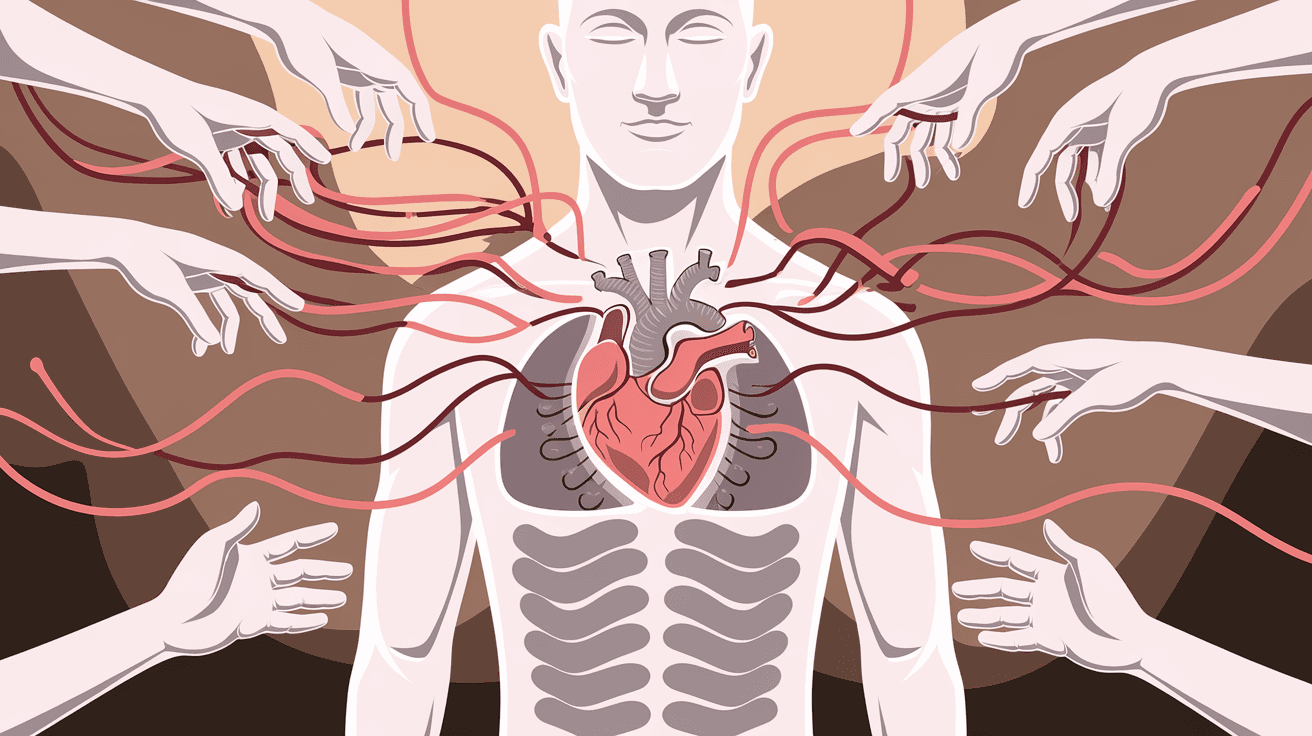
Most people unconsciously outsource their emotional regulation to others—seeking validation, approval, or comfort from external sources instead of developing internal emotional stability. This creates unstable relationships, chronic anxiety, and a fragile sense of self-worth that collapses when others are unavailable or disapproving.
Emotional outsourcing is the unconscious habit of relying on others to regulate your emotional state. Instead of developing internal coping mechanisms, you seek external validation, approval, or comfort to feel stable. Research from the University of Rochester shows that people with high external validation needs report 40% lower life satisfaction and 60% higher anxiety levels compared to those with strong internal regulation skills.
The signs are subtle but pervasive:
Your brain's emotional regulation system has two primary pathways: internal regulation (prefrontal cortex managing the amygdala) and external regulation (seeking co-regulation from others). When you consistently rely on external sources, the internal pathways weaken—literally.
Dr. Lisa Feldman Barrett's research at Northeastern University reveals that people who frequently seek external emotional regulation show decreased activity in the anterior cingulate cortex, the brain region responsible for emotional self-awareness and regulation. This creates a neurological dependency where your brain expects others to provide emotional stability.
Understanding your baseline emotional patterns is crucial. The Emotional Intelligence calculator can help you assess your current regulation skills and identify specific areas for development.
Your attachment style heavily influences emotional outsourcing tendencies. Research by Dr. Phillip Shaver shows that:
Step 1: Emotional Tracking Track your emotional state every 2 hours for 14 days. Rate your mood (1-10) and note:
Step 3: The 5-4-3-2-1 Grounding Protocol When you feel the urge to seek external validation, use this instead:
Step 4: Emotional Self-Soothing Practice Develop three go-to self-soothing techniques:
Step 5: Delayed Response Training When you feel the urge to seek validation:
Step 6: Communication Boundaries Set specific times for checking messages and social media. Research from the University of Pennsylvania shows that limiting social media to 30 minutes daily reduces anxiety by 29% and depression by 41% within one week.
Step 7: Emotional Independence Practice Spend increasing amounts of time alone without external stimulation:
The Boundary Strength calculator helps you assess your current boundary health and track improvement over time.
Step 8: Healthy Support Seeking Learn to distinguish between:
Step 9: Validation Weaning Gradually reduce validation-seeking behaviors:
A longitudinal study from Harvard's Grant Study found that individuals with strong emotional self-regulation skills had:
Obstacle: "I feel selfish for not constantly supporting others emotionally" Solution: Emotional independence makes you a better support system. You can offer genuine help instead of seeking mutual dependency.
Obstacle: "Others get upset when I don't immediately respond or need their validation" Solution: Healthy relationships adapt to and respect emotional boundaries. Those that don't may be codependent.
Obstacle: "I feel empty or bored when alone" Solution: This emptiness is withdrawal from external stimulation. It's temporary and indicates your internal regulation system is strengthening.
Need help building emotional regulation systems for your team or organization? Catalyst Consulting develops custom emotional intelligence training and assessment tools for businesses.
Track your emotional independence through:
Take the [Emotional Intelligence calculator](https://catalystproject.ai/calculators/heart/emotional-intelligence) to identify your specific emotional regulation strengths and growth areas, then begin the 14-day tracking protocol.
Expected time to results: 2-3 weeks for initial awareness and reduced anxiety, 6-8 weeks for measurable emotional independence, 3 months for stable internal regulation patterns
I build AI systems, automation workflows, and custom tools that turn these strategies into running infrastructure. Chemical engineer turned AI architect — I speak both the theory and the implementation.
Did you find this article helpful?
One insight per dimension, every week. What they're hiding about your food, your money, your mind, your relationships, and your sense of meaning — backed by research, delivered free. No sponsors. No affiliates. No bullshit.
Get personalized insights and track your progress across all five dimensions with The Mirror.
Access The Mirror