Heart
protocol
intermediate
The Emotional Contagion Shield: Protecting Yourself From Others' Chaos
Science-Based Protection from Others' Emotional Chaos
May 26, 2026
5 min read
Loading...
Navigation
The Catalyst Project
Science-Based Protection from Others' Emotional Chaos
You're carrying everyone else's emotional baggage and calling it empathy.
High-empathy individuals unconsciously absorb the stress, anxiety, and negativity of those around them, leading to emotional exhaustion, mood instability, and burnout without realizing the source of their distress.
Emotional contagion is the automatic mimicry and synchronization of emotions between people. Research by Hatfield et al. (1994) shows we unconsciously mirror others' facial expressions, postures, and vocal patterns within milliseconds, leading to shared emotional states.
The mechanism is neurological. Mirror neurons fire both when we experience an emotion and when we observe someone else experiencing it. A 2019 fMRI study by Prochazkova & Kret found that emotional contagion activates the same brain regions as direct emotional experience—your brain literally can't tell the difference between your emotions and absorbed ones.
This isn't weakness—it's biology. But without proper boundaries, you become an emotional sponge.
Chronic emotional contagion creates measurable physiological stress. A 2021 study by Stellar et al. tracked cortisol levels in healthcare workers and found those with high empathic concern showed 34% higher stress hormone levels by day's end, even when their own workload was controlled for.
The cascade effects include:
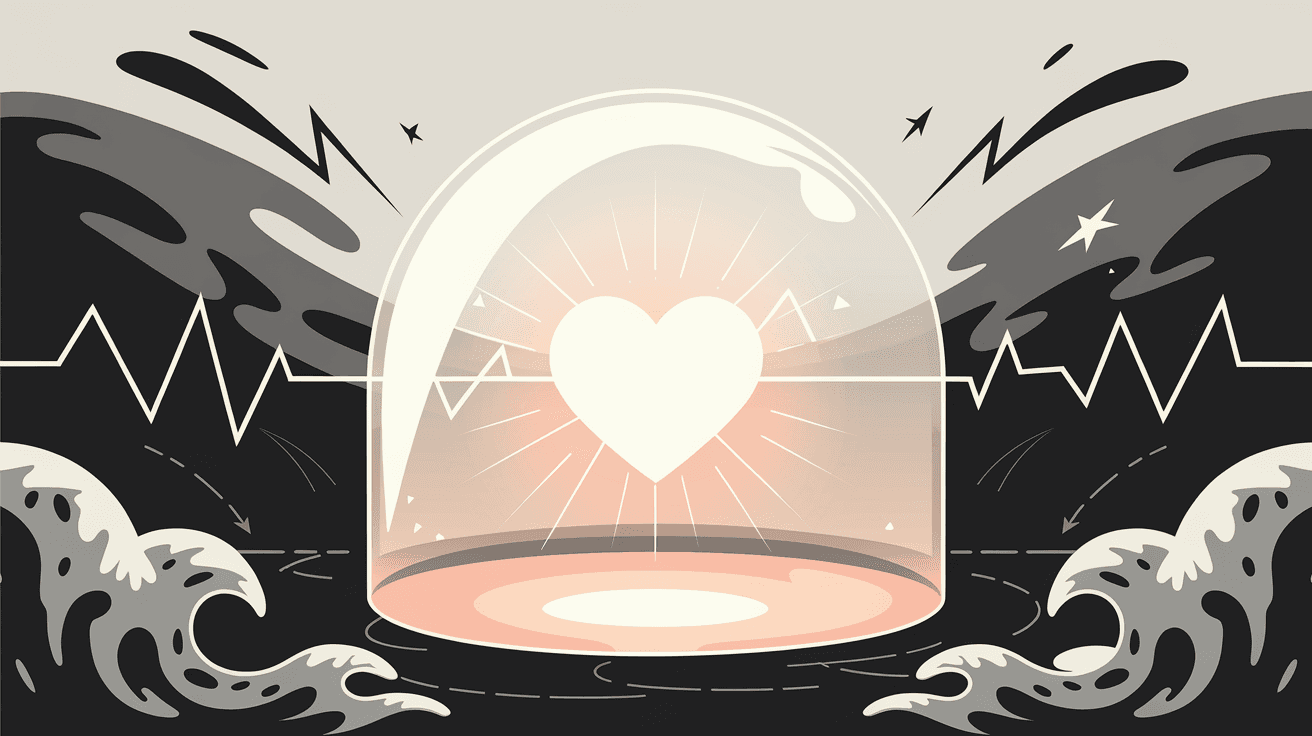
This protocol combines cognitive techniques with physiological interventions to create what researchers call "emotional firewalls"—conscious barriers that allow empathy while preventing absorption.
Step 1: Baseline Emotional Tracking For one week, track your emotional state every 2 hours using a simple 1-10 scale. Note:
Step 2: Somatic Awareness Building Practice the "emotional body scan" twice daily:
Step 3: The Emotional Firewall Technique Before entering emotionally charged environments, implement this 60-second protocol:
Step 4: Real-Time Deflection When you notice emotional absorption happening:
Step 5: Selective Empathy Not all emotions deserve your absorption. Create an "emotional triage" system:
Step 6: Emotional Cleansing Rituals After exposure to negative emotions, implement a "reset" protocol:
Workplace Drama In office environments, emotional contagion spreads fastest through negative gossip. A 2018 study by Barsade found that one negative team member can reduce group performance by 30-40% through emotional contagion alone.
Protocol: Use the "information diet" approach—limit exposure to workplace negativity to 5 minutes per day maximum. Your Social Battery Calculator can help determine your optimal exposure levels.
Family Dynamics Family emotional contagion is strongest due to shared neural patterns from childhood. Research by Repetti et al. (2002) shows family stress contagion can persist for 3-4 hours after exposure.
Protocol: Create physical boundaries (separate spaces) and temporal boundaries (limited exposure windows). The Attachment Style Calculator reveals how your attachment patterns make you vulnerable to family emotional absorption.
Social Media Exposure Digital emotional contagion is real—a 2014 Facebook study of 689,000 users found that exposure to negative posts increased negative posting by 1.3% within 24 hours.
Protocol: Implement "emotional hygiene" for social media—unfollow accounts that consistently trigger negative emotions, and limit news consumption to 15 minutes daily.
Track these specific metrics weekly:
True empathy doesn't require emotional absorption. Research by Bloom (2016) distinguishes between:
For deeper work on healthy emotional patterns, consider Decode: Heart, which covers attachment styles, communication patterns, and emotional intelligence development.
Need help building emotional boundary systems for your team or organization? Catalyst Consulting builds AI-powered tools for businesses to improve emotional health and communication.
Start with the [Emotional Intelligence Calculator](https://catalystproject.ai/calculators/heart/emotional-intelligence) to understand your baseline empathic patterns, then implement the Recognition Training phase for one week before advancing to active shielding techniques.
Expected time to results: Initial awareness within 3-5 days, measurable boundary strength within 2-3 weeks, full emotional firewall development within 30 days of consistent practice.
I build AI systems, automation workflows, and custom tools that turn these strategies into running infrastructure. Chemical engineer turned AI architect — I speak both the theory and the implementation.
Did you find this article helpful?
One insight per dimension, every week. What they're hiding about your food, your money, your mind, your relationships, and your sense of meaning — backed by research, delivered free. No sponsors. No affiliates. No bullshit.
Get personalized insights and track your progress across all five dimensions with The Mirror.
Access The Mirror