Temporal Discounting: Why Future You Always Loses
The neuroscience of why your future self always loses
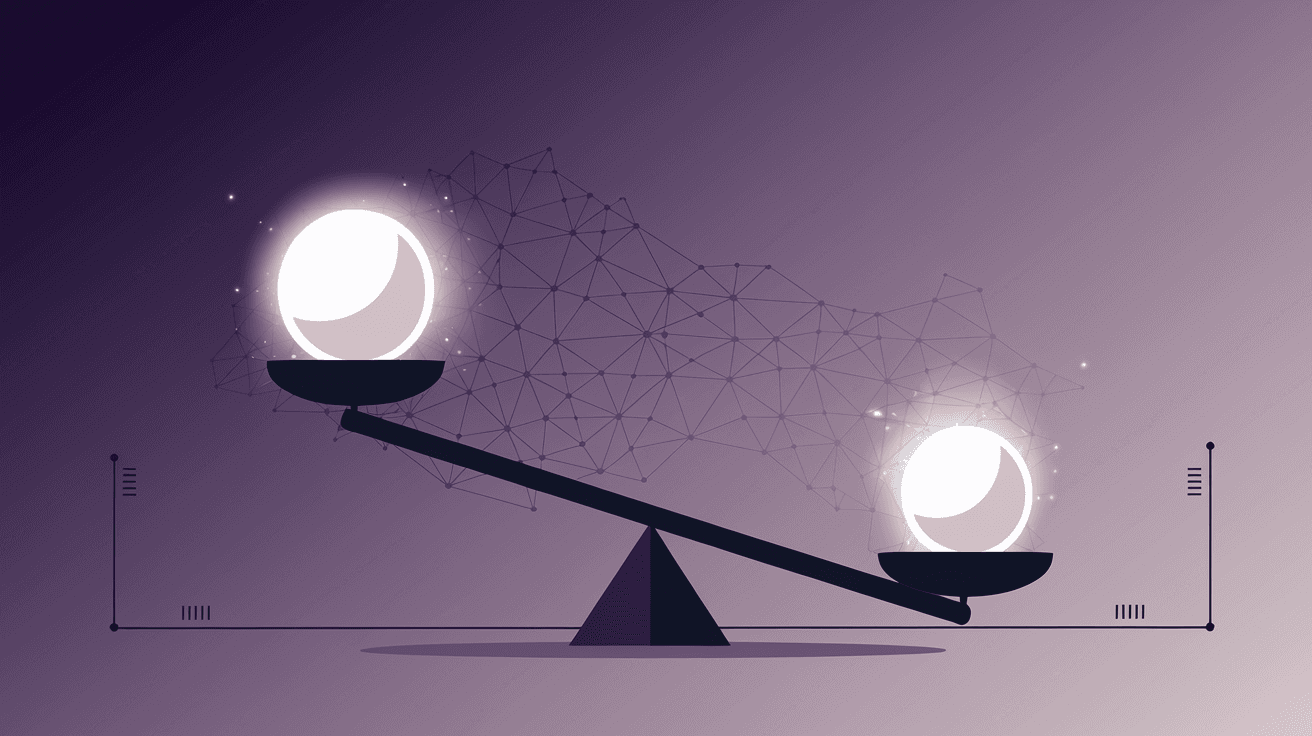
Your brain treats your future self like a complete stranger—literally reducing the neural activity in regions associated with self-referential thinking when considering future outcomes.
Despite knowing what's good for us long-term, we consistently choose immediate gratification over delayed rewards, sabotaging our health, wealth, and happiness through a neurological quirk called temporal discounting.
What Is Temporal Discounting?#
Temporal discounting is your brain's tendency to devalue rewards as they become more distant in time. A dollar today feels more valuable than a dollar next week, even though they're objectively identical. This isn't just about money—it affects every decision involving trade-offs between now and later.
The math is stark: people typically discount future rewards by 10-30% per year of delay. Offer someone $50 today or $100 in a year, and roughly 40% will take the immediate reward—an implied discount rate of 100%. This isn't rational economic behavior; it's hardwired neurobiology.
Research by Dr. Samuel McClure at Stanford using fMRI scans revealed the neural basis: immediate rewards activate the limbic system (emotion and impulse), while delayed rewards engage the prefrontal cortex (reasoning and planning). When these systems conflict, the limbic system usually wins.
The Neuroscience Behind Present Bias#
Your brain processes "future you" similarly to how it processes other people. UCLA neuroscientist Hal Hershfield's groundbreaking 2009 study found that when people think about their future selves, brain activity in the medial prefrontal cortex—the region associated with self-referential thinking—decreases significantly.
This neural disconnect has measurable consequences. In Hershfield's experiments, people who showed less neural continuity with their future selves saved 30% less for retirement and were more likely to engage in unethical behavior that would harm their future reputation.
The dopamine system compounds this problem. Dopamine neurons fire most intensely for immediate, uncertain rewards—exactly the opposite of what supports long-term thinking. A dopamine balance assessment can help you understand if your reward system is calibrated for short-term hits or sustainable motivation.
The Marshmallow Test Misconception#
The famous Stanford marshmallow experiment is often misinterpreted as a test of willpower. But follow-up research by Dr. Celeste Kidd revealed something crucial: children's ability to wait wasn't just about self-control—it was about trust in future rewards actually materializing.
When researchers first broke promises to children (providing broken crayons instead of new art supplies), those children were three times more likely to eat the marshmallow immediately in the subsequent test. This suggests temporal discounting isn't fixed—it's contextual and trainable.
The key insight: your brain's discount rate adapts based on environmental reliability. Growing up in unpredictable environments creates steeper discounting curves as an adaptive response.
Why Future You Feels Like a Stranger#
Three psychological mechanisms create distance from your future self:
1. Temporal Distance: Events feel less real as they move further into the future. A deadline next month triggers less urgency than one next week, even if the consequences are identical.
2. Identity Discontinuity: You assume your future self will have different preferences, capabilities, and circumstances. Research shows people predict 43% more personality change in themselves over the next decade than they actually experience.
3. Construal Level Theory: Distant events are processed abstractly while near events are processed concretely. "Exercise more" (abstract) versus "run for 20 minutes at 7 AM" (concrete).
This is where a cognitive load calculator becomes valuable—high cognitive load makes abstract future thinking even harder, pushing you toward immediate gratification.
The Compound Effect of Discounting#
Temporal discounting creates cascading effects across life domains:
Health: A 2019 meta-analysis of 43 studies found that people with steeper discount rates had 23% higher rates of obesity, 31% higher rates of substance abuse, and 18% lower exercise compliance.
Wealth: Behavioral economist David Laibson's research shows that every 1% increase in discount rate correlates with $1,847 less retirement savings per year of working life.
Relationships: Present bias leads to choosing immediate conflict avoidance over long-term relationship health. Couples therapy research shows that 67% of relationship problems stem from avoiding short-term discomfort (difficult conversations) that would prevent long-term pain.
Hacking Your Discount Rate#
The good news: temporal discounting is malleable. Here are evidence-based interventions:
Episodic Future Thinking: Vividly imagining specific future scenarios reduces discount rates by 15-45%. Instead of thinking "I should save money," visualize yourself at 65 enjoying financial freedom in specific detail.
Future Self Visualization: Hershfield's studies show that people who interact with age-progressed photos of themselves save 6.8% more for retirement. Apps like FaceApp aren't just entertainment—they're behavior change tools.
Implementation Intentions: Converting abstract goals into specific if-then plans. "If it's 7 AM on Monday, then I will run for 20 minutes" creates neural pathways that bypass the discount rate entirely.
Environmental Design: Remove friction from future-beneficial behaviors and add friction to present-biased ones. A habit stacking calculator can help you design environments that make good choices automatic.
Bundling: Pairing immediate rewards with delayed benefits. Listening to audiobooks only while exercising creates immediate gratification for future health benefits.
The Decision Fatigue Connection#
Your discount rate isn't constant throughout the day. Research by Dr. Shai Danziger analyzing 1,100 parole decisions found that judges approved 65% of applications at the beginning of sessions but only 10% right before breaks—when decision fatigue peaked.
As mental energy depletes, your brain defaults to the path of least resistance: immediate gratification. This is why you eat well all day then binge at night, or why Sunday night planning sessions often fail by Wednesday.
A decision fatigue assessment can help you identify when your temporal discounting is most severe and structure important decisions accordingly.
The Productivity Paradox#
Here's where it gets interesting: temporal discounting affects different types of tasks differently. Research by Dr. Kaitlin Woolley shows that people discount the value of learning and skill-building tasks much more steeply than entertainment or consumption tasks.
This explains why you'll binge-watch Netflix for hours but struggle to spend 30 minutes learning a valuable skill. Your brain treats skill acquisition as delayed gratification even when you enjoy the process.
The solution involves reframing learning as immediate reward rather than future investment. Focus on the pleasure of understanding, the satisfaction of progress, or the immediate social benefits of sharing new knowledge.
Need help building systems that work with your brain's temporal discounting instead of against it? Catalyst Consulting helps teams design workflows and environments that naturally promote long-term thinking while satisfying immediate psychological needs.
Cross-Domain Applications#
Understanding temporal discounting transforms how you approach multiple life areas:
Career: Choose roles with immediate learning opportunities over just future advancement potential. Your brain will sustain motivation better.
Health: Focus on immediate benefits of healthy behaviors (better sleep tonight, more energy today) rather than distant outcomes (living longer).
Relationships: Invest in connections that provide immediate emotional rewards while building long-term trust and intimacy.
Learning: Structure education around immediate wins and rapid feedback loops rather than distant certification goals.
The Decode: Mind course dives deeper into cognitive biases like temporal discounting and provides frameworks for making better long-term decisions despite your brain's present bias.
Key Takeaways
- 1.Your brain devalues future rewards by 10-30% per year, making immediate gratification neurologically preferred
- 2.Future self feels like a stranger due to decreased activity in self-referential brain regions
- 3.Temporal discounting is trainable through episodic future thinking, environmental design, and implementation intentions
Your Primary Action
Start with the [decision fatigue calculator](https://catalystproject.ai/calculators/mind/decision-fatigue) to identify your optimal times for long-term planning, then [book a discovery call](https://cal.com/thecatalyst/discovery) if you want help building systems that work with your temporal discounting patterns.
Expected time to results: 2-3 weeks for initial behavioral changes, 2-3 months for measurable improvements in long-term decision making
Free Mind Tools
Action Steps
- 1Complete a [cognitive load assessment](https://catalystproject.ai/calculators/mind/cognitive) to identify when your temporal discounting is strongest
- 2Create age-progressed photos of yourself using apps like FaceApp and place them where you make financial decisions
- 3Convert one abstract long-term goal into specific if-then implementation intentions this week
How to Know It's Working
- Increased savings rate or investment consistency within 30 days
- Reduced procrastination on important but non-urgent tasks
- Improved adherence to health and learning routines
Sources & Citations
- [1]McClure, S.M., et al. "Separate Neural Systems Value Immediate and Delayed Monetary Rewards." Science, 2004.
- [2]Hershfield, H.E., et al. "Increasing Saving Behavior Through Age-Progressed Renderings of the Future Self." Journal of Marketing Research, 2011.
- [3]Kidd, C., et al. "Rational Snacking: Young Children's Decision-Making on the Marshmallow Task Is Moderated by Beliefs About Environmental Reliability." Cognition, 2013.
- [4]Danziger, S., et al. "Extraneous Factors in Judicial Decisions." Proceedings of the National Academy of Sciences, 2011.
- [5]Woolley, K., et al. "The Time Course of Interest: How Immediate Rewards Can Bias Decision Makers Toward the Future." Psychological Science, 2018.
Need this built for your business?
I build AI systems, automation workflows, and custom tools that turn these strategies into running infrastructure. Chemical engineer turned AI architect — I speak both the theory and the implementation.
Related Articles
Did you find this article helpful?
The Weekly Decode
One insight per dimension, every week. What they're hiding about your food, your money, your mind, your relationships, and your sense of meaning — backed by research, delivered free. No sponsors. No affiliates. No bullshit.
Ready to take action?
Get personalized insights and track your progress across all five dimensions with The Mirror.
Access The Mirror