Why Smart People Make Bad Decisions
How High IQ Becomes a Liability in Decision-Making
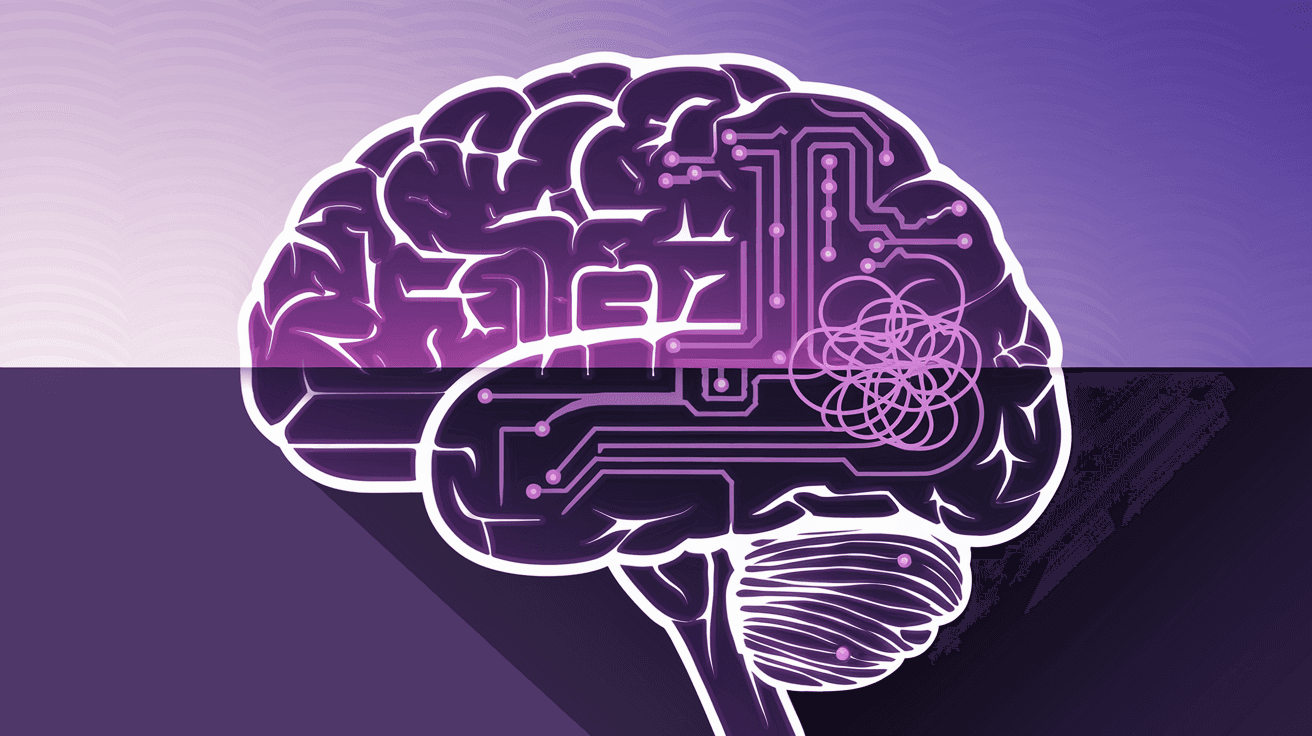
Intelligence doesn't protect against bad decisions—it often makes them worse by giving you more sophisticated ways to rationalize being wrong.
Most high-IQ individuals believe their intelligence shields them from cognitive biases and poor decision-making. This confidence is not only misplaced—it's dangerous. Research shows that smart people often make worse decisions than their less intelligent counterparts because they're better at constructing elaborate justifications for flawed reasoning.
The Intelligence Trap#
Keith Stanovich's groundbreaking research at the University of Toronto shattered a comfortable myth: that intelligence and rationality go hand in hand. Across multiple studies involving over 1,000 participants, Stanovich found virtually zero correlation between IQ scores and performance on tests of rational thinking.
In one particularly striking experiment, participants with SAT scores in the top 1% performed no better than average on basic probability problems. When asked to evaluate the likelihood of Linda being a bank teller versus a feminist bank teller (the famous "Linda problem"), 85% of highly intelligent participants fell for the conjunction fallacy—despite having the analytical tools to spot the logical error.
The problem isn't that smart people can't think rationally. It's that they rarely choose to.
Why Intelligence Backfires#
The Motivated Reasoning Engine
Your brain's primary job isn't to find truth—it's to maintain consistency with your existing beliefs while preserving social status. Intelligence simply gives you a more powerful engine for this motivated reasoning.
Research by Dan Kahan at Yale Law School demonstrated this beautifully. He gave participants a complex statistical problem about skin cream effectiveness, then presented the identical data structure as a gun control study. Participants solved the math correctly when it was about skin cream but made systematic errors when the same data challenged their political beliefs—and the errors were largest among the most numerate participants.
Smart people don't overcome bias. They weaponize their intelligence to serve it.
The Overconfidence Multiplier
Intelligence breeds overconfidence, and overconfidence kills decision quality. A 2008 study in the Journal of Personality and Social Psychology found that people in the top 25% of analytical thinking scores were 23% more confident in incorrect answers than those in the bottom 25%.
This creates a vicious cycle: Smart people make confident predictions, receive intermittent reinforcement when they're right, and attribute failures to bad luck rather than flawed reasoning. Each cycle increases confidence while decision quality stagnates or declines.
The Single Perspective Trap
Intelligence often manifests as the ability to construct compelling arguments. But this strength becomes a weakness when you only construct arguments for one side—usually the side you already favor.
Research by Philip Tetlock found that experts with higher IQs were actually worse at political and economic forecasting than simple statistical models. The reason? They were too good at explaining away disconfirming evidence and too confident in complex theories that couldn't be falsified.
The Four Cognitive Blind Spots of Smart People#
1. The Confirmation Sophistication
Average people seek information that confirms their beliefs. Smart people do something more insidious: they seek out information that appears balanced but systematically interpret it to confirm their beliefs.
A 2006 study by Charles Lord at Stanford showed that when presented with mixed evidence about capital punishment's effectiveness, both proponents and opponents became more convinced of their original position. But participants with higher SAT scores showed larger polarization effects—their intelligence helped them find more sophisticated ways to dismiss contradictory evidence.
2. The Complexity Addiction
Smart people love complex explanations because they signal intelligence. But complex doesn't mean accurate. The Occam's Razor principle exists precisely because our brains naturally overcomplicate.
Financial markets provide endless examples. Quantitative analysts with PhDs from MIT construct elaborate models that consistently underperform simple index funds. Their intelligence becomes a liability because they can't resist adding another variable, another layer of sophistication that moves them further from truth.
3. The Authority Bypass
Intelligent people often dismiss expertise in domains outside their competence, assuming their general analytical skills transfer everywhere. This is the "Nobel Prize winner syndrome"—brilliant physicists making confident pronouncements about economics, or successful entrepreneurs dispensing medical advice.
Research by David Dunning shows that people with high ability in one domain systematically overestimate their competence in unrelated domains. The correlation between confidence and actual ability approaches zero once you step outside someone's area of expertise.
4. The Sunk Cost Amplification
Smart people are particularly vulnerable to sunk cost fallacies because they can construct more elaborate justifications for continuing failed projects. Their intelligence helps them generate new reasons why this time will be different, why the investment will eventually pay off.
A Harvard Business School study of venture capital decisions found that partners with higher analytical test scores were more likely to continue funding failing startups, even when presented with identical negative information. Their ability to construct sophisticated scenarios for potential success blinded them to the simple reality that most failing ventures continue to fail.
The Neuroscience of Smart Mistakes#
Brain imaging studies reveal why intelligence can backfire. When smart people encounter information that challenges their beliefs, areas associated with physical pain light up—the anterior cingulate cortex and right ventrolateral prefrontal cortex. Their brains literally experience contradictory information as painful.
But here's the crucial finding: areas associated with analytical thinking (the dorsolateral prefrontal cortex) show decreased activation when processing belief-threatening information. Intelligence doesn't overcome emotional reasoning—it gets hijacked by it.
This explains why smart people often make their worst decisions about topics they care most about. The higher the emotional stakes, the more their intelligence serves motivated reasoning rather than truth-seeking.
The Rationality Protocol#
The solution isn't to become less intelligent—it's to develop what Stanovich calls "rational thinking dispositions." Here's how:
1. Implement Systematic Doubt
Before making important decisions, actively seek out the strongest possible arguments against your preferred option. Set a specific target: find three compelling reasons why you might be wrong.
Charlie Munger calls this "inverting"—always invert. Instead of asking "Why will this work?" ask "Why will this fail?" Your intelligence will serve you better when pointed at your own blind spots.
2. Use Outside View Protocols
When evaluating decisions, force yourself to consider the "reference class"—similar situations that have occurred before. If 90% of restaurants fail within five years, your restaurant idea needs to overcome base rates, not just seem compelling to you.
Research by Daniel Kahneman and Dan Lovallo found that teams using "reference class forecasting" improved prediction accuracy by 27% compared to their usual inside-view analysis.
3. Create Accountability Systems
Make specific, time-bound predictions and track your accuracy. Keep a decision journal noting your confidence level and reasoning. Review it quarterly.
Philip Tetlock's Good Judgment Project found that people who kept score of their predictions and received regular feedback improved their forecasting accuracy by 30% over two years.
4. Practice Intellectual Humility
Regularly say "I don't know" and mean it. Seek out areas where you're likely wrong and explore them seriously. Join communities where your views are minority positions.
Research shows that people who score higher on intellectual humility scales make better decisions across domains from investing to hiring to strategic planning.
5. Use Pre-mortems
Before committing to important decisions, conduct a "pre-mortem." Assume the decision failed spectacularly and work backward to identify what could have gone wrong. This activates different neural pathways than forward-looking analysis and helps overcome optimism bias.
Gary Klein's research with military and business teams found that pre-mortems increased the identification of potential problems by 30% compared to traditional planning methods.
When Intelligence Helps (And When It Doesn't)#
Intelligence is genuinely useful for:
- Processing complex information quickly
- Identifying patterns in large datasets
- Solving well-defined problems with clear parameters
- Learning new skills efficiently
- Emotions or identity are involved
- Problems are ill-defined or require creativity
- Social dynamics matter more than analytical precision
- Quick decisions are better than perfect ones
Edge Cases#
This framework doesn't apply to:
Technical Domains with Clear Feedback In fields like mathematics, programming, or engineering, intelligence strongly correlates with better outcomes because errors are quickly apparent and correctable.
Low-Stakes Decisions For trivial choices, overthinking is genuinely counterproductive. Sometimes the smart decision is to decide quickly and move on.
Crisis Situations Under extreme time pressure, analytical thinking can be paralyzing. Sometimes fast, intuitive decisions based on experience outperform careful analysis.
Highly Specialized Expertise Within narrow domains of deep expertise, intelligence combined with experience does lead to superior decision-making. The problems arise when generalizing beyond that expertise.
Key Takeaways
- 1.Intelligence and rationality are separate skills—being smart doesn't make you rational
- 2.Smart people make worse decisions when emotions or identity are involved because they're better at sophisticated self-deception
- 3.The solution is systematic doubt, outside-view thinking, and intellectual humility rather than more analysis
Your Primary Action
Start a decision journal today. For the next month, write down every significant decision, your confidence level (1-10), and your reasoning. Review monthly to identify patterns in your judgment errors.
Expected time to results: 2-3 weeks for initial awareness improvements, 2-3 months for measurable decision quality gains
Free Mind Tools
Action Steps
- 1Practice devil's advocate thinking by actively seeking evidence against your initial position before making important decisions
- 2Implement pre-mortem analysis by imagining your decision failed and working backwards to identify potential blind spots
- 3Create decision-making checklists that force you to consider alternative explanations and outcomes
- 4Seek out diverse perspectives from people who disagree with you before finalizing major choices
- 5Use structured decision frameworks like cost-benefit analysis to bypass emotional reasoning
How to Know It's Working
- Reduced frequency of decisions you later regret or need to reverse
- Increased accuracy in predicting outcomes of your major decisions
- More frequent consideration of alternative viewpoints before deciding
Need this built for your business?
I build AI systems, automation workflows, and custom tools that turn these strategies into running infrastructure. Chemical engineer turned AI architect — I speak both the theory and the implementation.
Related Articles
Did you find this article helpful?
The Weekly Decode
One insight per dimension, every week. What they're hiding about your food, your money, your mind, your relationships, and your sense of meaning — backed by research, delivered free. No sponsors. No affiliates. No bullshit.
Ready to take action?
Get personalized insights and track your progress across all five dimensions with The Mirror.
Access The Mirror