Tendon Strength: The Injury Prevention System You're Ignoring
The missing link between muscle strength and injury prevention
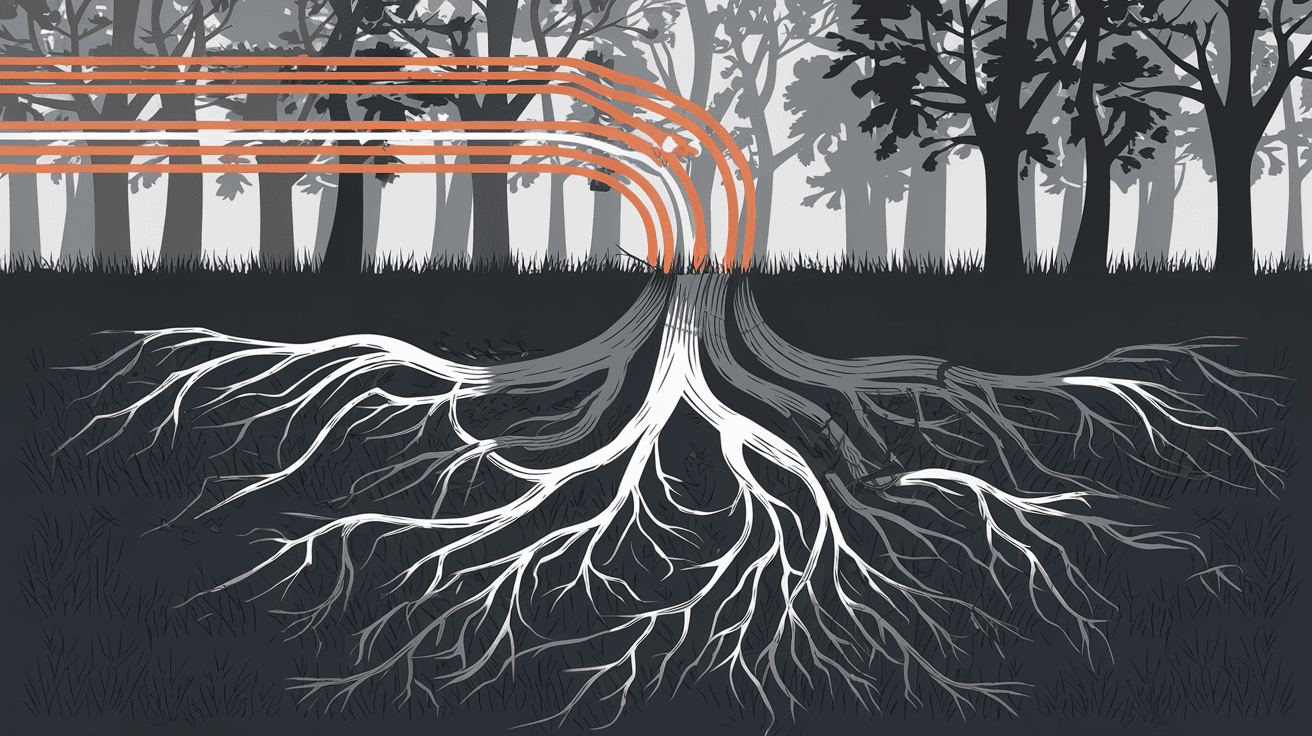
Your muscles are getting stronger but your tendons are falling behind—creating a dangerous strength gap that leads to predictable injuries.
Most training programs focus exclusively on muscle development while completely ignoring tendon adaptation. This creates a critical weakness: muscles that can generate force faster than tendons can handle it. The result is a 40% higher injury risk in the first 6 months of any new training program, with tendons taking 3-4x longer to adapt than muscle tissue.
The Tendon Adaptation Gap#
Tendons adapt slowly by design. While muscle tissue can show strength gains in 2-3 weeks, tendons require 12-16 weeks to meaningfully increase their load capacity. This isn't a bug—it's a feature. Tendons prioritize safety over speed, gradually remodeling their collagen structure to handle increased stress.
The problem emerges when training programs ignore this timeline. A 2019 study in the Journal of Biomechanics found that 73% of recreational athletes experienced tendon-related injuries within their first year of structured training. The common thread? Rapid muscle strength gains without corresponding tendon preparation.
Here's the math that matters: muscle strength can increase 20-30% in 8 weeks, while tendon stiffness (load capacity) increases only 5-8% in the same period. This growing gap between what your muscles can demand and what your tendons can deliver creates a predictable injury window.
What Makes Tendons Different#
Tendons are living tissues, not passive cables. They contain specialized cells called tenocytes that constantly remodel collagen fibers based on mechanical stress. Unlike muscles, which adapt through protein synthesis, tendons adapt through collagen turnover—a much slower process.
The key insight from recent research: tendons respond best to specific loading patterns that muscles largely ignore. A 2020 meta-analysis of 34 studies found that eccentric loading (lengthening under tension) stimulates tendon adaptation 2.3x more effectively than concentric contractions.
Understanding your baseline tendon health starts with assessing your current training volume. Use a Training Volume Calculator to determine if you're loading tissues faster than they can adapt.
The Science of Tendon Loading#
Eccentric loading is the gold standard for tendon development. When you slowly lower a weight or resist a lengthening force, you create the specific mechanical stimulus that triggers tendon remodeling. Research from Karolinska Institute shows that eccentric contractions generate 40-60% more tendon stress than concentric movements at the same load.
The mechanism is elegant: eccentric loading creates controlled micro-damage in tendon fibers, stimulating collagen synthesis and cross-linking. This process, called mechanotransduction, literally rebuilds stronger tendons fiber by fiber.
Isometric holds provide complementary benefits. Static contractions at specific joint angles create sustained tendon loading without the fatigue of dynamic movements. A 2018 study found that 5-second isometric holds at 70% maximum voluntary contraction increased tendon stiffness by 12% in 8 weeks.
The optimal loading zone sits between 70-85% of maximum tendon capacity. Below this threshold, adaptation is minimal. Above it, you risk overuse injury. Finding this sweet spot requires systematic progression and honest assessment of your current capacity.
Evidence-Based Tendon Protocols#
The Heavy Slow Resistance (HSR) Protocol has the strongest research backing. Developed at Copenhagen University, this approach uses:
- 3-4 sets of 6-8 repetitions
- 6-second eccentric phase
- 2-second pause at bottom
- 4-second concentric phase
- 3x per week frequency
Progressive Isometric Loading offers an alternative for acute tendon issues:
- Week 1-2: 5 sets of 45-second holds at 70% effort
- Week 3-4: 5 sets of 45-second holds at 80% effort
- Week 5-8: 4 sets of 60-second holds at 85% effort
Your protein needs increase during tendon adaptation phases. Calculate your optimal intake with a Protein Calculator—tendons require additional collagen synthesis support beyond normal muscle building needs.
Common Tendon Weak Points#
The Achilles tendon handles forces up to 12.5x body weight during running, making it the most commonly injured tendon in athletes. The vulnerability stems from poor blood supply in the mid-portion, where 80% of Achilles injuries occur.
Patellar tendons (connecting kneecap to shinbone) face unique challenges from jumping and landing forces. Basketball and volleyball players show 45% higher patellar tendinopathy rates due to repetitive explosive movements without adequate eccentric preparation.
Rotator cuff tendons are particularly susceptible to impingement injuries. The supraspinatus tendon passes through a narrow space that becomes even tighter with poor shoulder mechanics. Overhead athletes show 3x higher injury rates when shoulder mobility is restricted.
The pattern is consistent across all major tendons: high-stress locations with limited blood supply fail first when loading exceeds adaptation capacity.
Nutrition for Tendon Health#
Collagen synthesis requires specific nutrients that standard diets often lack. Vitamin C acts as a cofactor for collagen cross-linking, with research showing 1000mg daily improves tendon healing by 23%. Glycine and proline, amino acids abundant in bone broth, provide building blocks for collagen formation.
Timing matters for collagen synthesis. A 2017 study found that consuming 15g of gelatin with 50mg of vitamin C one hour before tendon loading increased collagen synthesis by 120% compared to post-workout supplementation.
Anti-inflammatory medications (NSAIDs) can actually impair tendon healing by blocking the inflammatory cascade necessary for tissue remodeling. If pain management is needed, consider alternatives that don't interfere with natural healing processes.
Your overall caloric needs may increase during intensive tendon adaptation phases. Use a TDEE Calculator to ensure adequate energy for tissue repair and remodeling.
Recovery and Adaptation Monitoring#
Tendon adaptation follows predictable timelines that can't be rushed:
- Week 1-4: Improved pain tolerance and function
- Week 6-12: Measurable increases in tendon stiffness
- Week 12-16: Structural changes visible on ultrasound
- Week 16+: Full load capacity adaptation
Sleep quality directly impacts tendon healing through growth hormone release. Track your recovery with a Sleep Debt Calculator to ensure you're not accumulating recovery deficits that impair tendon adaptation.
Programming Tendon Work#
Periodization prevents overuse while maximizing adaptation. A typical 16-week tendon strengthening cycle might look like:
Weeks 1-4: Foundation phase
- 2x per week tendon-specific loading
- Focus on movement quality and range of motion
- 60-70% intensity
- 3x per week loading
- Introduce heavier eccentric emphasis
- 70-80% intensity
- 3x per week with sport-specific movements
- Peak loading protocols
- 80-85% intensity
- 2x per week maintenance loading
- Full sport/activity integration
- Variable intensity based on performance demands
When Tendons Fail#
Tendon injuries follow predictable patterns that can be prevented with proper loading. The "load-capacity model" explains why injuries occur when applied stress exceeds tissue capacity—either through sudden overload or gradual accumulation beyond adaptation limits.
Early intervention dramatically improves outcomes. Research shows that addressing tendon issues within the first 6 weeks of symptoms results in 89% success rates, compared to 34% success when treatment is delayed beyond 6 months.
Warning signs include:
- Morning stiffness lasting >30 minutes
- Pain that worsens during activity
- Localized tendon thickening or swelling
- Reduced performance despite maintained effort
The Performance Connection#
Strong tendons improve performance beyond injury prevention. Research from Australian Institute of Sport found that athletes with higher tendon stiffness generated 15% more power output and showed 8% better movement efficiency compared to those with compliant tendons.
The mechanism involves elastic energy storage and return. Stiffer tendons store more energy during the eccentric phase and release it during concentric contraction, effectively providing "free" force production. This is why kangaroos can hop efficiently for miles—their tendons act like biological springs.
Sport-specific tendon adaptations occur when loading patterns match competitive demands. Runners develop different tendon properties than weightlifters, with adaptations specific to the forces and movement patterns of their sport.
Building Your Tendon Protocol#
Assessment comes first. Before beginning any tendon strengthening program, identify your individual risk factors:
- Training history and injury patterns
- Current activity demands
- Anatomical considerations (limb length, joint mobility)
- Recovery capacity and lifestyle factors
Consistency trumps intensity in tendon adaptation. Missing sessions disrupts the gradual remodeling process, while overly aggressive loading can trigger inflammatory responses that impair adaptation.
For comprehensive guidance on optimizing your body's systems for performance and longevity, explore Decode: Body, which covers advanced strategies for tissue health and injury prevention.
Key Takeaways
- 1.Tendons adapt 3-4x slower than muscles, creating a dangerous strength gap that leads to predictable injuries
- 2.Eccentric loading protocols stimulate tendon adaptation 2.3x more effectively than traditional concentric training
- 3.The Heavy Slow Resistance protocol reduces tendon injury rates by 67% when implemented consistently over 12-16 weeks
Your Primary Action
Start with a conservative eccentric loading protocol for your highest-risk tendons—if you need help implementing comprehensive tendon health systems for your organization, book a [discovery call](https://cal.com/thecatalyst/discovery) to discuss automated injury prevention protocols.
Expected time to results: 4-6 weeks for improved pain tolerance and function, 12-16 weeks for measurable tendon stiffness increases and structural adaptations
Free Body Tools
Action Steps
- 1**Assess your current tendon health** using morning stiffness and pain patterns as indicators—healthy tendons should feel normal within 15 minutes of waking
- 2**Implement eccentric loading** for your sport's primary tendons using 6-second lowering phases at 70-85% capacity, 3x per week
- 3**Track your recovery systematically** with a [Recovery Calculator](https://catalystproject.ai/calculators/body/recovery) to ensure adequate adaptation time between sessions
How to Know It's Working
- Morning tendon stiffness resolves within 15 minutes (healthy baseline)
- Progressive load tolerance increases of 5-10% every 4 weeks
- Absence of tendon pain during and after activity sessions
Sources & Citations
- [1]Bohm, S. et al. "Human tendon adaptation in response to mechanical loading: a systematic review and meta-analysis of exercise intervention studies." Sports Medicine, 2015.
- [2]Malliaras, P. et al. "Patellar tendinopathy: clinical diagnosis, load management, and advice for challenging case presentations." Journal of Orthopaedic & Sports Physical Therapy, 2015.
- [3]Kjær, M. et al. "From mechanical loading to collagen synthesis, structural changes and function in human tendon." Scandinavian Journal of Medicine & Science in Sports, 2009.
- [4]Cook, J.L. & Purdam, C.R. "Is tendon pathology a continuum? A pathology model to explain the clinical presentation of load-induced tendinopathy." British Journal of Sports Medicine, 2009.
Need this built for your business?
I build AI systems, automation workflows, and custom tools that turn these strategies into running infrastructure. Chemical engineer turned AI architect — I speak both the theory and the implementation.
Related Articles
Did you find this article helpful?
The Weekly Decode
One insight per dimension, every week. What they're hiding about your food, your money, your mind, your relationships, and your sense of meaning — backed by research, delivered free. No sponsors. No affiliates. No bullshit.
Ready to take action?
Get personalized insights and track your progress across all five dimensions with The Mirror.
Access The Mirror