The Curiosity Gap Theory: How Questions Drive Learning
The neuroscience of strategic information gaps
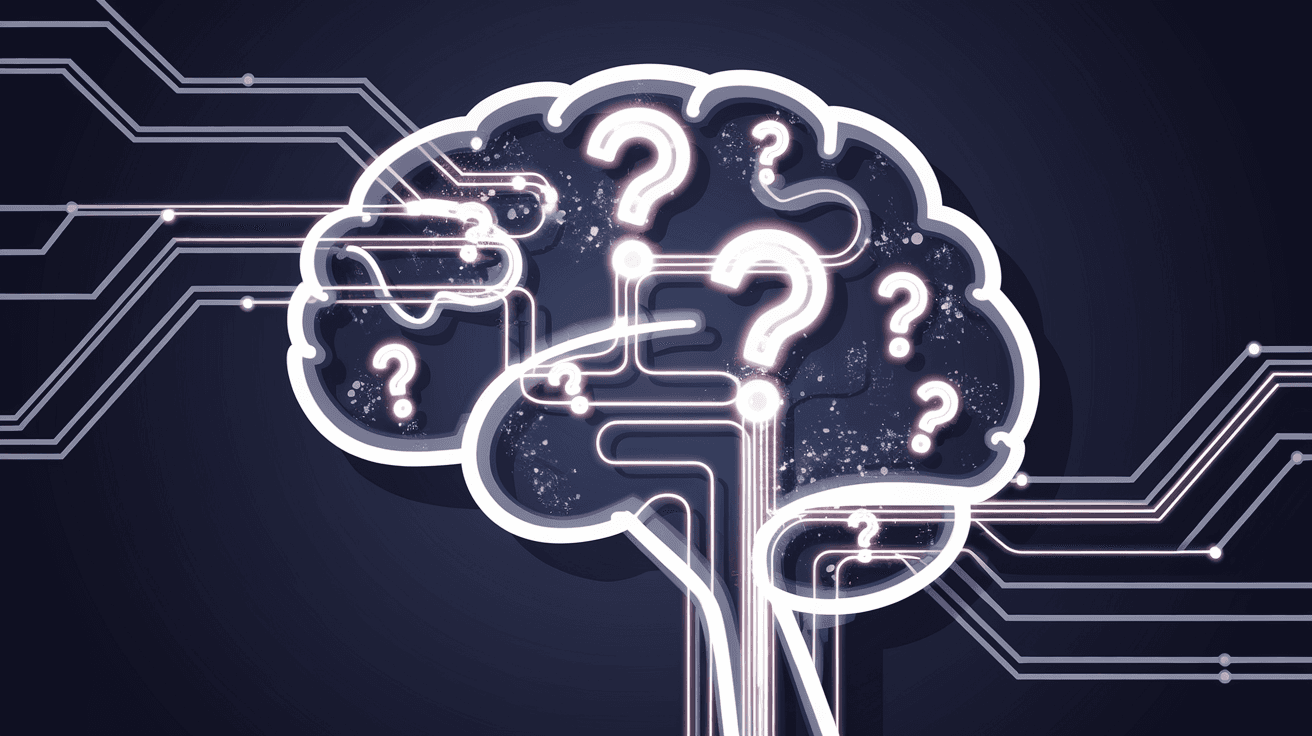
Your brain craves answers the same way it craves food when hungry—and neuroscience shows this "curiosity gap" can boost learning retention by up to 65%.
Most people think curiosity is just a nice-to-have personality trait. They're wrong. Curiosity is a measurable neurological drive that, when properly triggered, creates one of the most powerful learning states your brain can achieve. Yet 90% of educational content ignores the curiosity gap entirely, leaving massive learning potential on the table.
What Is the Curiosity Gap Theory?#
The Curiosity Gap Theory states that learning motivation peaks when you perceive a specific gap between what you know and what you want to know. This isn't just psychological—it's neurological. When your brain detects an information gap it deems important, it releases dopamine in anticipation of closing that gap, creating what researchers call "curiosity-driven learning states."
The theory was formalized by Carnegie Mellon's George Loewenstein in 1994, but the underlying mechanism wasn't understood until recent neuroimaging studies. UCLA neuroscientist Matthias Gruber's 2014 research found that curiosity triggers dopamine release in the brain's reward circuit 10-15 seconds before receiving the answer, priming the hippocampus for enhanced memory formation.
Here's the key insight: curiosity isn't random—it's predictable and engineerable.
The Neuroscience Behind Information Hunger#
When you encounter a curiosity gap, three brain regions activate simultaneously:
The anterior cingulate cortex detects the information conflict—the mismatch between what you know and what you're trying to understand. This creates a mild state of cognitive tension, similar to physical discomfort.
The caudate nucleus releases dopamine in anticipation of resolving the gap. This isn't the "reward" dopamine you get after solving a problem—it's "wanting" dopamine that drives information-seeking behavior.
The hippocampus enters a heightened state of plasticity, becoming 40-60% more receptive to encoding new memories. This state lasts approximately 20 minutes after the curiosity trigger.
Gruber's team found that people in curiosity-driven states showed 65% better retention of target information and 30% better retention of incidental information they encountered while curious. Even more striking: they could predict with 87% accuracy which information participants would remember based solely on their pre-answer curiosity ratings.
To assess your current learning capacity and identify optimization opportunities, try the Focus Capacity Calculator—it measures your brain's ability to sustain attention during learning tasks.
The Four Types of Curiosity Gaps#
Not all curiosity is created equal. Researchers have identified four distinct types that trigger different learning responses:
1. Knowledge Gaps ("I know X, but what about Y?") These are the classic information gaps—you have partial knowledge and want to complete the picture. Example: "I know compound interest works, but how exactly do you calculate it?"
2. Empathy Gaps ("What would that feel like?") These involve wanting to understand experiences outside your own. Mirror neurons fire when you imagine yourself in someone else's situation, creating emotional curiosity.
3. Conflict Gaps ("Which one is actually true?") When you encounter contradictory information, your brain creates urgency to resolve the inconsistency. This type generates the strongest dopamine response but also the highest cognitive load.
4. Prediction Gaps ("What happens next?") Your brain constantly makes predictions about outcomes. When those predictions are challenged or left unresolved, curiosity drives you to seek closure.
Understanding which type of gap you're creating helps optimize the learning response. Knowledge gaps work best for technical content, while prediction gaps excel for storytelling and case studies.
The Curiosity Sweet Spot: Not Too Easy, Not Too Hard#
The optimal curiosity gap exists at 85% confidence level—you should feel like you almost know the answer but can't quite grasp it. Too easy (95%+ confidence) and there's no gap to close. Too hard (<50% confidence) and your brain gives up rather than engage.
This aligns with Vygotsky's Zone of Proximal Development, but adds neurochemical precision. MIT's research on optimal difficulty found that curiosity peaks when people estimate a 70-90% chance of being able to figure out the answer with effort.
The "tip-of-the-tongue" phenomenon is peak curiosity—when you feel like the answer is right there but just out of reach. Neuroimaging shows this state produces the highest dopamine release and strongest memory encoding.
For complex topics, break them into smaller curiosity gaps rather than creating one overwhelming gap. Each mini-gap should feel solvable within 3-5 minutes of focused attention.
Engineering Curiosity: The GAPS Framework#
G - Generate the Question Start with the answer you want people to learn, then work backward to create the question that makes that answer feel essential. Don't ask "What is compound interest?" Ask "Why do some people retire at 35 while others work until 70, even with similar incomes?"
A - Anchor to Existing Knowledge Connect the new information to something they already know and care about. The brain processes new information by relating it to existing neural networks. Isolated facts create weak curiosity gaps.
P - Preview the Payoff Hint at why the answer matters without giving it away. "Once you understand this mechanism, you'll see why most productivity advice fails" creates stronger curiosity than "Let me explain this mechanism."
S - Sustain the Gap Don't resolve the curiosity immediately. Let it build for 30-90 seconds. This allows dopamine levels to peak and the hippocampus to reach optimal plasticity. The anticipation is as important as the answer.
To optimize your overall learning approach and identify which gaps work best for your cognitive style, the Learning Style Calculator can help you understand whether you respond better to visual, auditory, or kinesthetic curiosity triggers.
The Dark Side of Curiosity Gaps#
Information gaps can become addictive. Social media exploits curiosity gaps through "curiosity gap headlines" ("You Won't Believe What Happened Next") that trigger dopamine without providing meaningful resolution. This creates a cycle of seeking without satisfaction.
Unresolved gaps create cognitive load. The Zeigarnik Effect shows that incomplete tasks occupy mental resources until resolved. Too many open curiosity gaps can overwhelm working memory and reduce focus on priority tasks.
False gaps manipulate behavior. Clickbait, conspiracy theories, and marketing often create artificial curiosity gaps that feel important but lead to low-value information. Learning to distinguish genuine knowledge gaps from manufactured ones is crucial for intellectual health.
The Cognitive Load Calculator can help you assess whether you're managing information gaps effectively or overwhelming your mental capacity.
Practical Applications: From Learning to Leadership#
For Personal Learning: Before reading any book or article, spend 2 minutes writing down 3 specific questions you want answered. This pre-commitment creates genuine curiosity gaps and can improve retention by 40-50%.
For Teaching and Presentations: Start every lesson or presentation with a question that your audience cares about but can't fully answer. Spend 60-90 seconds building the gap before providing resolution. This technique, called "problem-based learning," consistently outperforms traditional information-first approaches.
For Content Creation: Structure information to create and resolve curiosity gaps every 2-3 minutes. This matches the natural attention span and keeps dopamine levels elevated throughout the learning experience.
For Team Management: Instead of giving direct answers, ask questions that help team members discover solutions themselves. This creates ownership through curiosity-driven learning rather than passive information transfer.
The Curiosity-Memory Connection#
Curious states don't just improve memory for the target information—they improve memory for everything you encounter while curious. Gruber's research showed that people in curiosity-driven states had better memory for random faces shown between questions and answers, even though the faces were completely unrelated to their curiosity.
This suggests a practical strategy: batch your most important learning during naturally curious states. If you're genuinely curious about one topic, that's an ideal time to expose yourself to other information you want to remember.
The effect lasts approximately 20 minutes after curiosity resolution, creating a "curiosity afterglow" where your brain remains in an enhanced learning state.
When Curiosity Gaps Don't Work#
Anxiety blocks curiosity. When stress levels are high, the amygdala suppresses the brain's reward circuits, making curiosity-driven learning nearly impossible. Address anxiety first, then create information gaps.
Overwhelm shuts down engagement. If someone is already at cognitive capacity, additional curiosity gaps feel like burden rather than opportunity. The Stress Assessment Calculator can help identify when you or your team are too overwhelmed for curiosity-based learning.
Cultural context matters. Some cultures value direct information transfer over discovery-based learning. What feels like helpful curiosity in one context may feel manipulative in another.
Expertise changes the game. True experts often have such developed mental models that artificial curiosity gaps feel patronizing. They prefer direct, efficient information transfer.
Need help implementing curiosity-driven learning systems in your organization or automating the delivery of information gaps in your content? Catalyst Consulting specializes in turning learning science into scalable systems that drive measurable engagement and retention improvements.
The Future of Curiosity-Driven Learning#
Adaptive learning systems are beginning to incorporate real-time curiosity measurement. By tracking engagement metrics, eye movement, and even physiological responses, AI can optimize the timing and intensity of curiosity gaps for individual learners.
Virtual reality creates unprecedented opportunities for empathy gaps—letting people experience situations that would be impossible or impractical in real life. Early studies show VR-induced curiosity produces 2-3x stronger memory formation than traditional media.
Neurofeedback training may soon allow people to consciously trigger curiosity states, similar to how meditation training develops attention control. Preliminary research suggests curiosity can be trained like a skill, with measurable improvements in both intensity and duration.
The intersection of neuroscience and learning technology is creating tools that would have seemed like science fiction just a decade ago. But the fundamental principle remains unchanged: your brain learns best when it's hungry for answers.
Key Takeaways
- 1.Curiosity triggers dopamine release that primes the brain for 65% better memory formation
- 2.The optimal curiosity gap exists at 85% confidence—almost knowing but not quite grasping the answer
- 3.Curious states improve memory for all information encountered, not just the target content
- 4.The GAPS framework (Generate, Anchor, Preview, Sustain) provides a systematic approach to engineering curiosity
Your Primary Action
Start your next important learning session by identifying one genuine question you can't fully answer—let that curiosity drive your engagement. If you want help implementing curiosity-driven learning systems for your team, book a [discovery call](https://cal.com/thecatalyst/discovery) to explore how we can optimize your organization's learning outcomes.
Expected time to results: Initial improvements in engagement and retention visible within 1-2 learning sessions, with measurable memory improvements appearing after 1-2 weeks of consistent application.
Free Mind Tools
Action Steps
- 1Before your next learning session, write down 3 specific questions you want answered—this pre-commitment creates genuine curiosity gaps and can improve retention by 40-50%
- 2Use the [Learning Speed Calculator](https://catalystproject.ai/calculators/mind/learning-speed) to establish your baseline learning rate, then track improvements as you implement curiosity-driven techniques
- 3Practice the "tip-of-the-tongue" technique: when teaching others, ask questions that make them feel like they almost know the answer before providing resolution
How to Know It's Working
- 40-65% improvement in information retention within 2 weeks of implementing curiosity gaps
- Increased engagement duration (people spend 2-3x longer with curiosity-driven content)
- Better transfer of learning to new situations (curious learners apply knowledge more flexibly)
Sources & Citations
- [1]Gruber, M.J., Gelman, B.D., & Ranganath, C. "States of curiosity modulate hippocampus-dependent learning via the dopaminergic circuit." Neuron, 2014.
- [2]Loewenstein, G. "The psychology of curiosity: A review and reinterpretation." Psychological Bulletin, 1994.
- [3]Kang, M.J., et al. "The wick in the candle of learning: Epistemic curiosity activates reward circuitry and enhances memory." Psychological Science, 2009.
- [4]Kidd, C., & Hayden, B.Y. "The psychology and neuroscience of curiosity." Neuron, 2015.
- [5]McGillivray, S., et al. "Thirst for knowledge: The effects of curiosity and interest on memory in younger and older adults." Psychology and Aging, 2015.
Need this built for your business?
I build AI systems, automation workflows, and custom tools that turn these strategies into running infrastructure. Chemical engineer turned AI architect — I speak both the theory and the implementation.
Related Articles
Did you find this article helpful?
The Weekly Decode
One insight per dimension, every week. What they're hiding about your food, your money, your mind, your relationships, and your sense of meaning — backed by research, delivered free. No sponsors. No affiliates. No bullshit.
Ready to take action?
Get personalized insights and track your progress across all five dimensions with The Mirror.
Access The Mirror